El Corazón - Free
Julian Kraus-Polk and I made plans to climb El Corazón on El Capitan in Yosemite National over the summer 2025, and for the first time in my life, I dedicated myself to training for a single climbing objective. In May 2026 we managed to both send the route in good style (in my opinion at least), which feels like a major accomplishment for me especially being that this ascent marks the first time I've ever climbed a pitch of 5.13b, sport or trad. There is something about free climbing on El Cap that gives me the inspiration to dig deep, project, and achieve a goal.
I'm feeling pretty proud of this one. But here's the funny thing… even if we hadn't sent, I think I'd feel about equally as proud, because it seems to be the process and partnership that provide the bulk of fulfilment.
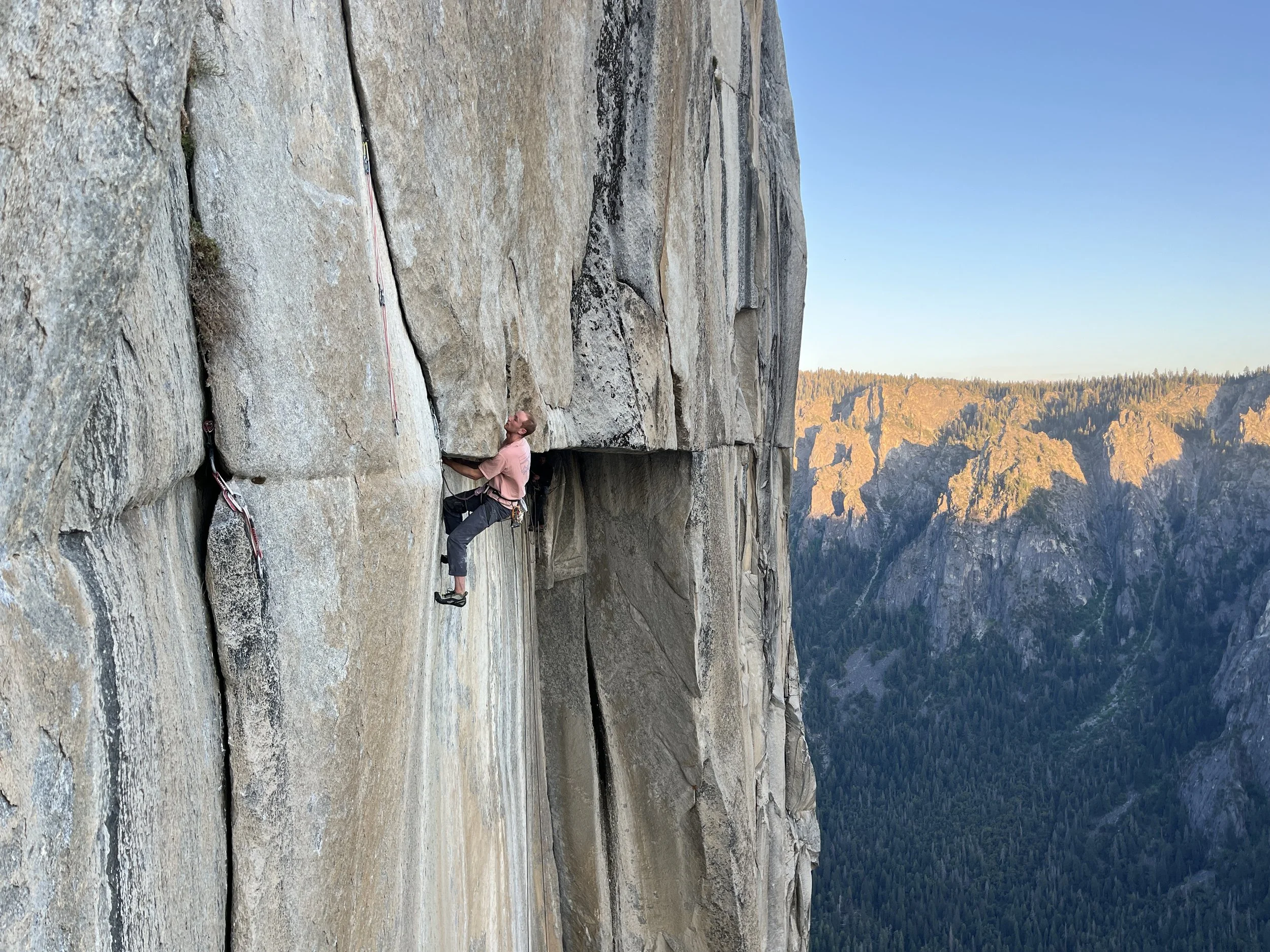
Free climbing on El Cap feels fairly routine these days, and El Corazón is no longer the obscure test piece it once was. Plenty of talented climbers have been up it, but it just so happened to be the perfect route for where Julian and I were at. The route contains five pitches of 5.13, some exciting 5.12, flat out scary 5.11, one of the best 5.10 splitter hand cracks I’ve ever done, plus a single pitch of 5.9! The vision the Huber brothers had to piece together free routes on El Cap around the turn of the millennium genuinely blows my mind. It is only through time, repeated ascents, and accumulated beta that their routes have become accessible to regular humans.
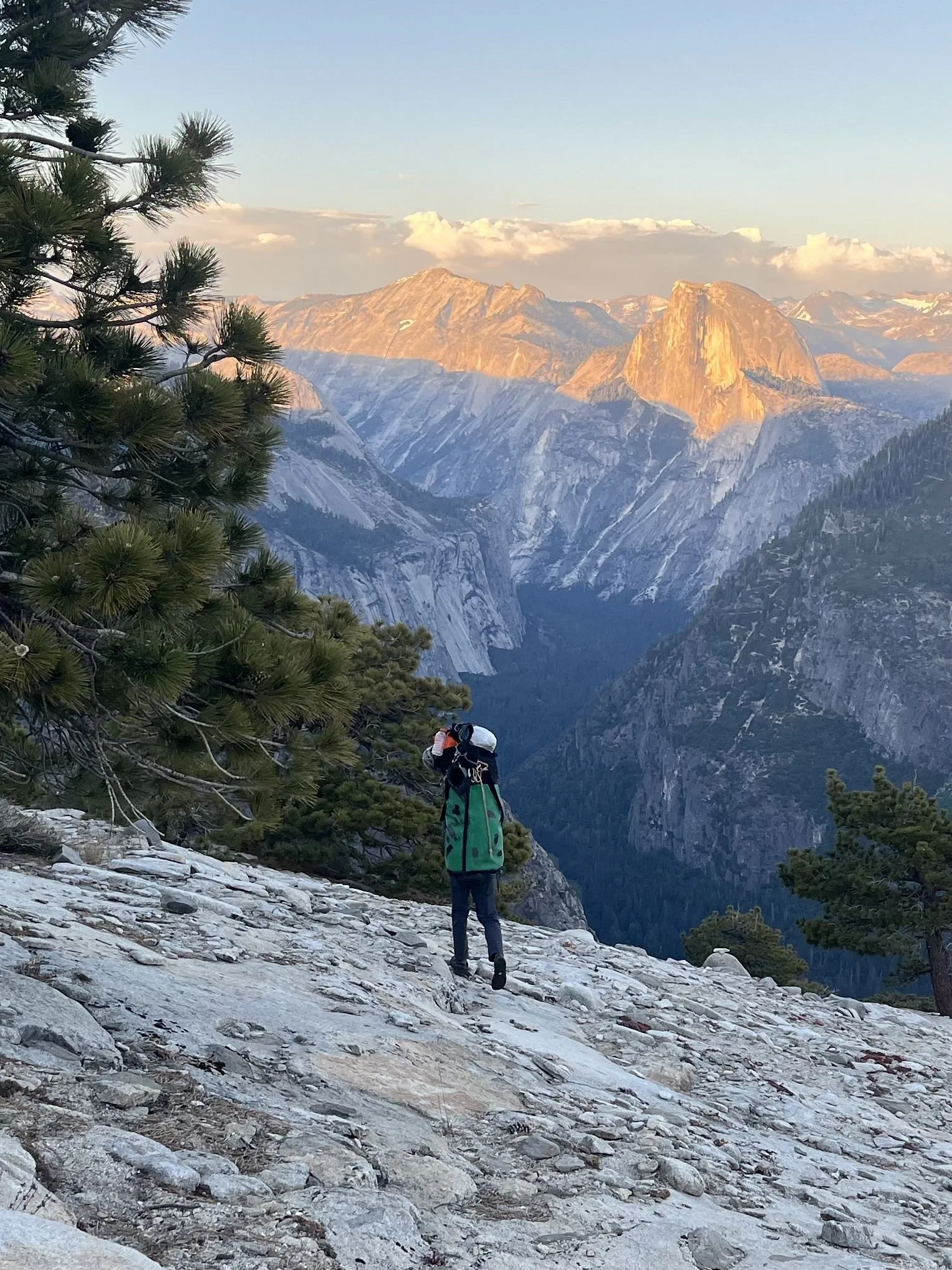
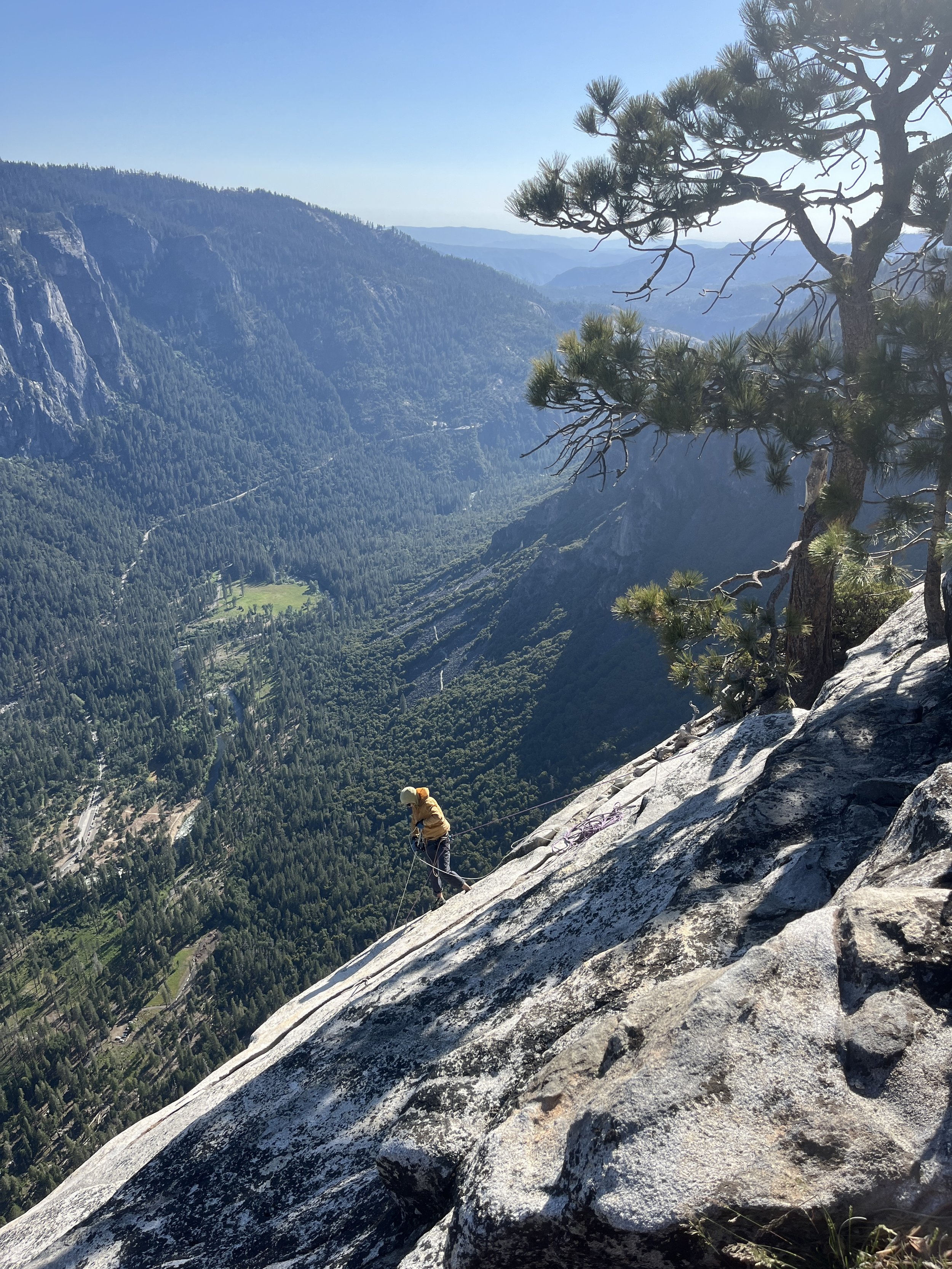
Unlike my previous two free climbing efforts on El Cap, we did not go purely ground up, instead opting to stash water in two locations to make hauling easier. The week before we started, we hiked to the summit, rapped down to Tower to the People Ledge to stash 6 gallons of water, and climbed out via the final 7 pitches of the route, which are shared with Golden Gate. The next day, we hauled 9 gallons of water and a portaledge up to Mammoth Terraces via fixed lines, then climbed 4 pitches of moderate terrain to Grey Ledges. In one weekend, we made our hauling situation far easier and stacked the odds a bit more in our favor, at the cost of some style points.
We blasted off on the Freeblast early Saturday morning, both managing to hold it together without falling, and made it to Grey Ledges by mid-afternoon. In less than a day, we climbed 50% of the route but would go on to take an additional 7 days to climb the remaining half.
I have always struggled to motivate myself to climb at my limit, spending much of the past 5 years focused on climbing big walls quickly and alpine objectives instead. One motivation for trying El Corazón was to refocus on free climbing and set a goal to push my climbing limit, physically. With that in mind, I took training seriously for the first time in my life, consistently hang-boarding and bouldering indoors over the winter. Come spring, I climbed my first 5.13a since Golden Gate, which made me feel ready. I would guess that most people who have sent this route have likely climbed hundreds or at least dozens of pitches of 5.13 but going into the climb, the majority of 5.13 pitches I had done were still on El Cap.
The pitch I was most concerned about was the Beak Flake which is rated 5.13b and is the first crux on the route. It contains a boulder problem with a deadpoint or dyno depending on your size. On our second day on the wall, after a few attempts, I came to the unfortunate conclusion that I could not do the move. I am frankly terrible at dynamic climbing, but after some coaching from Julian, I was able to do it in isolation. Above the boulder sat another 120 feet of steep crack climbing with a V6 layback crux that I figured out how to foot-jam through at 5.11. Julian did the deadpoint with ease but struggled on the upper crux, which I found amusing given how opposite our climbing styles are.
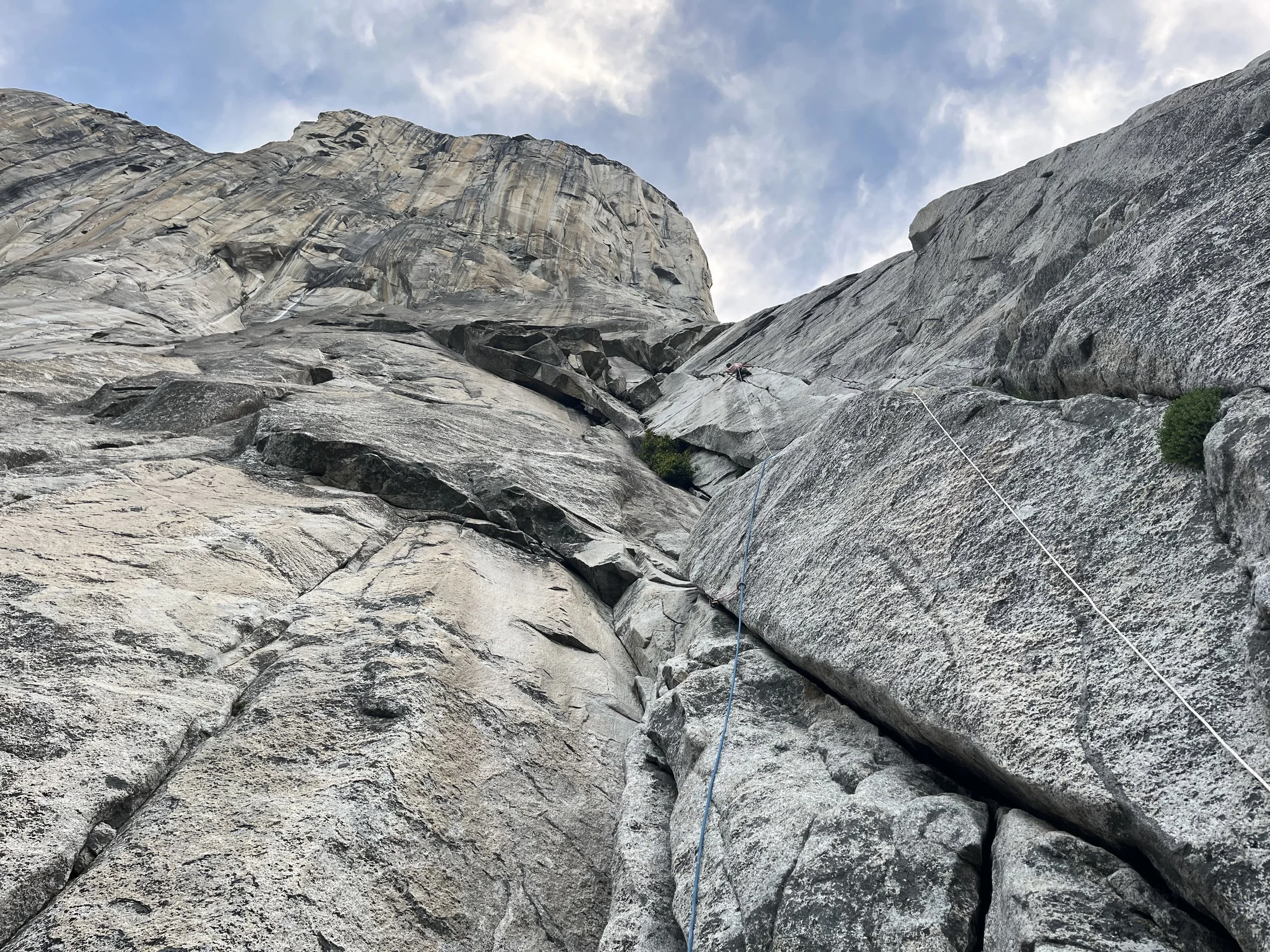
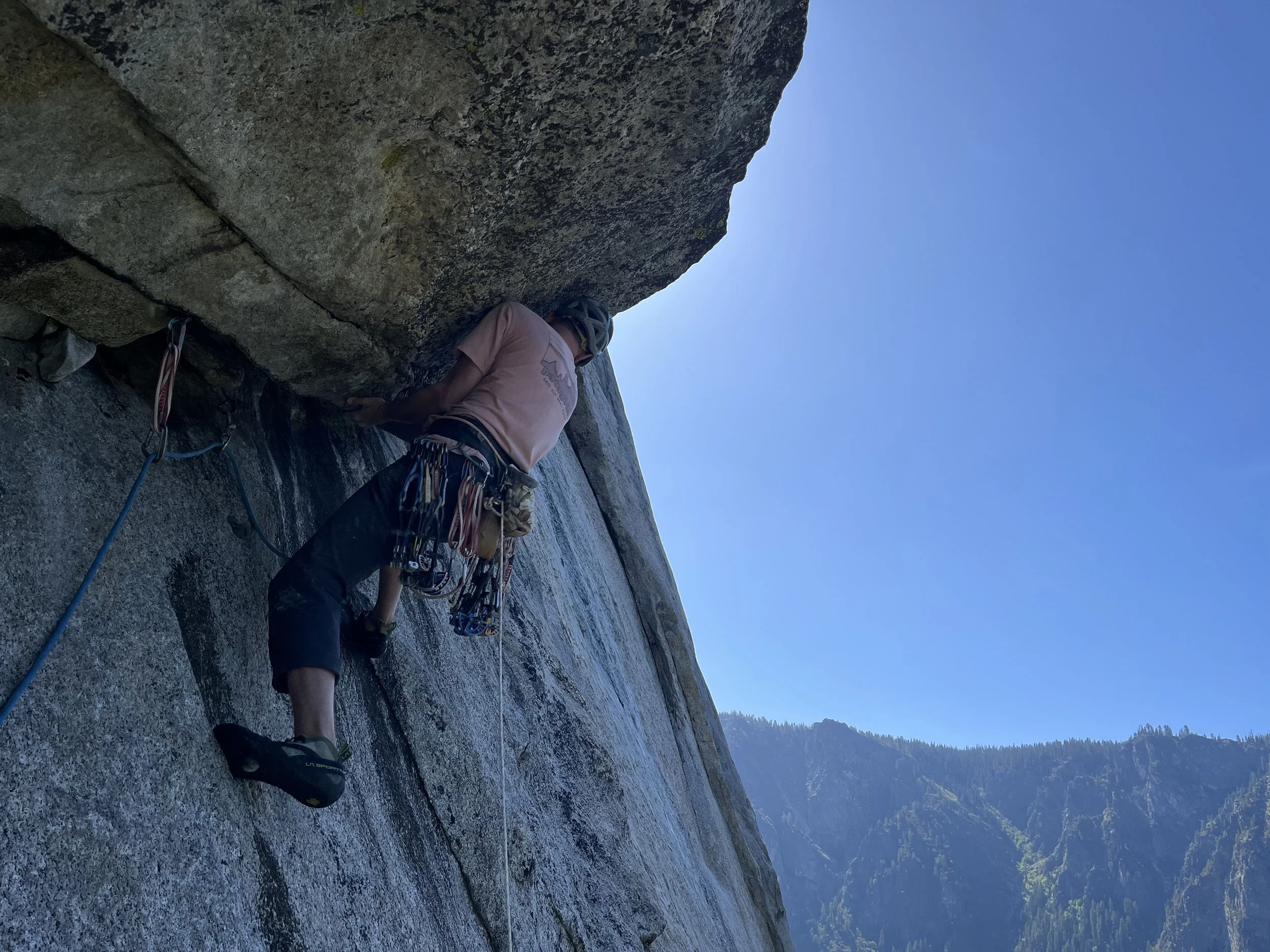
That afternoon I gave the pitch a proper redpoint. I failed twice on the boulder problem, but on my third attempt I stuck the deadpoint. I climbed the remaining 120 feet slowly, milking every rest to save enough power for the foot jams above. Julian sent a few hours later once the sun left the wall, and with that, we knew we would be moving up the next morning.
Day three saw us climb only three pitches, but they turned out to be the most mentally taxing of the entire climb for me.
First was an extremely pumpy 5.11b splitter flake, manageable enough and actually quite incredible, but the two pitches that followed took many hours. Both were highly traversing and poorly protected, which I assume is where this route earns its R rating. Julian led the first, labeled "5.12, loose, scary" on the topo, tiptoeing over incredibly loose flakes with insecure, committing climbing. With dozens of people on the wall below us in the Heart Ledges area, the consequences of breaking a hold were very real. We both managed not to fall, which was really the only good option for leader and follower alike.
The next pitch, rated 5.12d, turned out to be the sleeper crux of the route. We had heard just a week earlier that a team had taken a huge fall and ripped out multiple fixed pitons and beaks, so I brought a hammer and pins to nail the pitch back in. I quested up using a mix of free and aid tactics, hammering in some beaks before the crux traverse moves. Both Julian and I opted not to lead the pitch in its current state. We did not have the psych, skin, time, or desire after sending it on TR in the dark, and I felt the pitch was unnecessarily run out as it stands. I would be very supportive of someone adding a couple of bolts. For now, I left two beaks in, which should make the pitch fine without a hammer for those willing to give it a proper ground up lead burn.
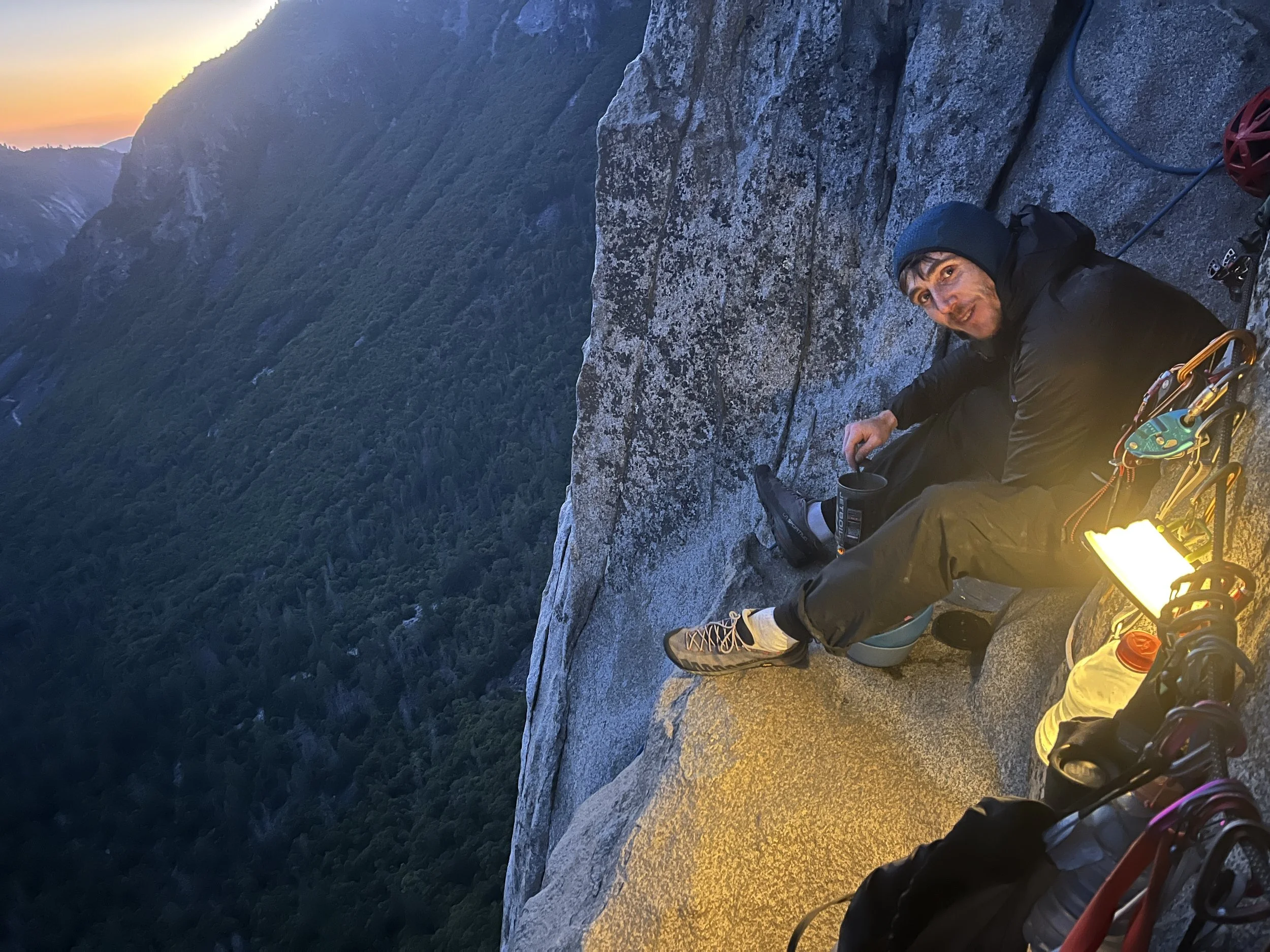
We arrived at a small ledge that evening, tied off a loose rock below our portaledge so it would not fall off the mountain, and went to bed under the next pitch named Bobby’s Bunny Slope. I woke up the next morning excited for what I anticipated to be the most classic pitches of the route.
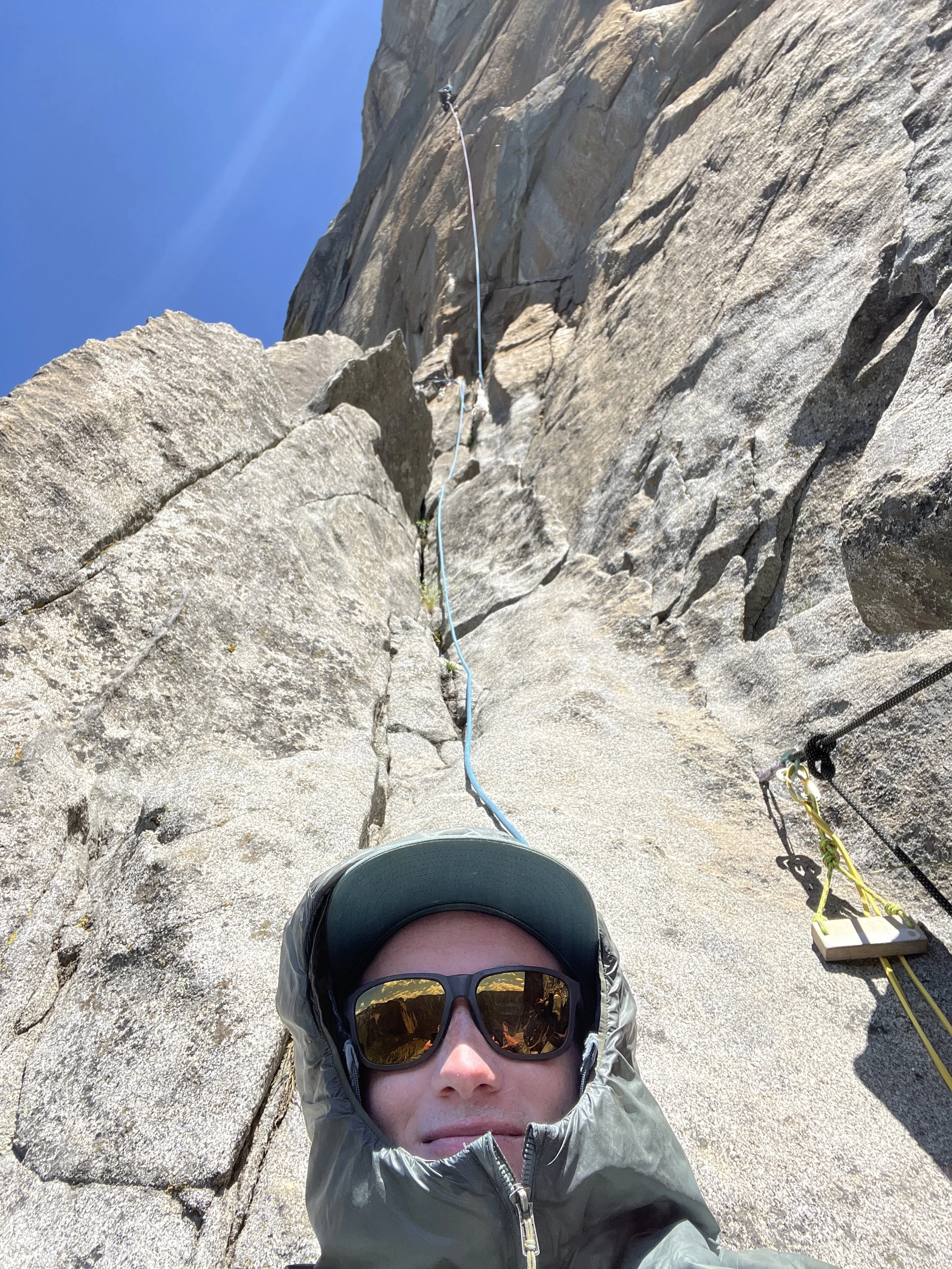
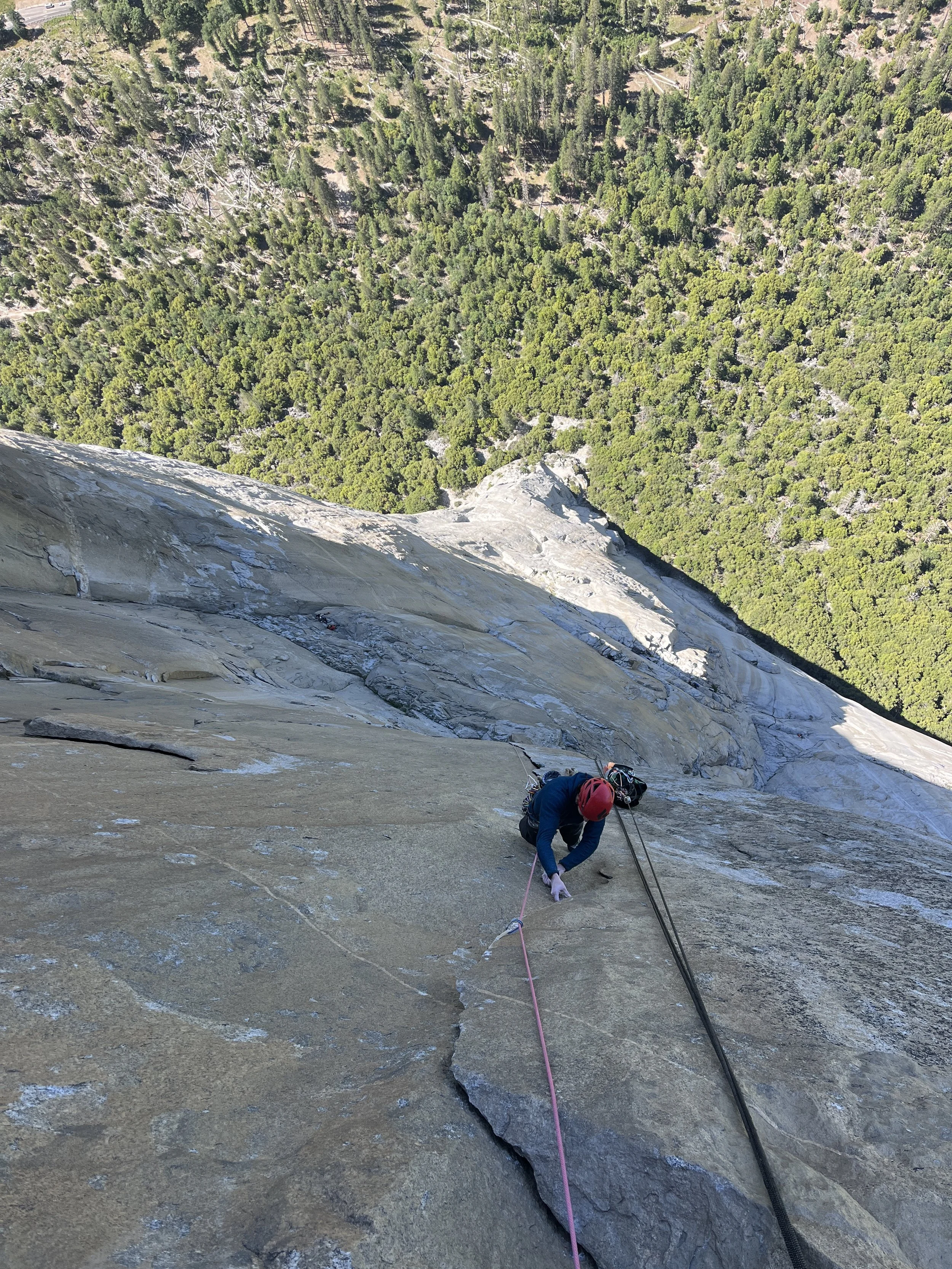
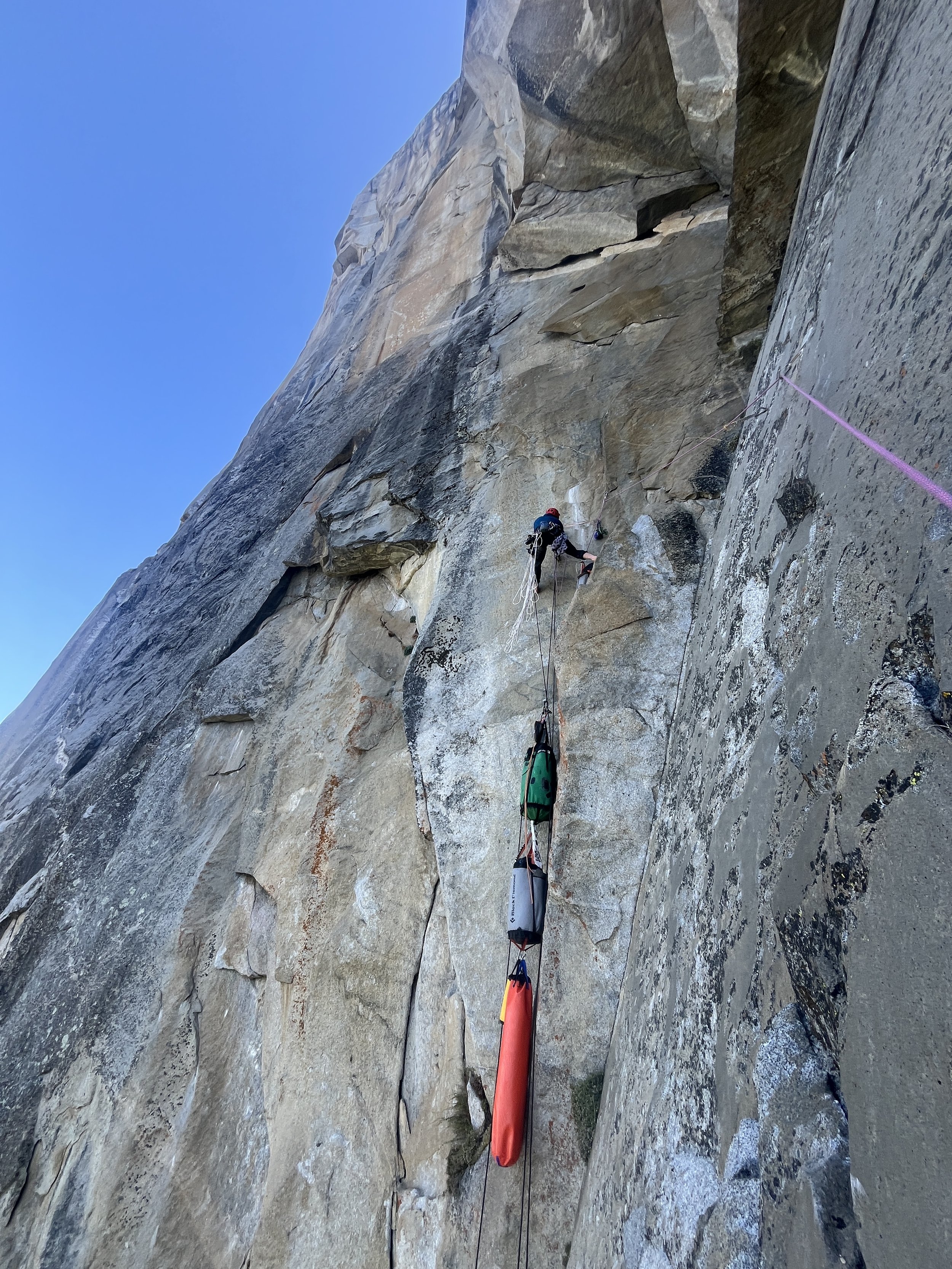
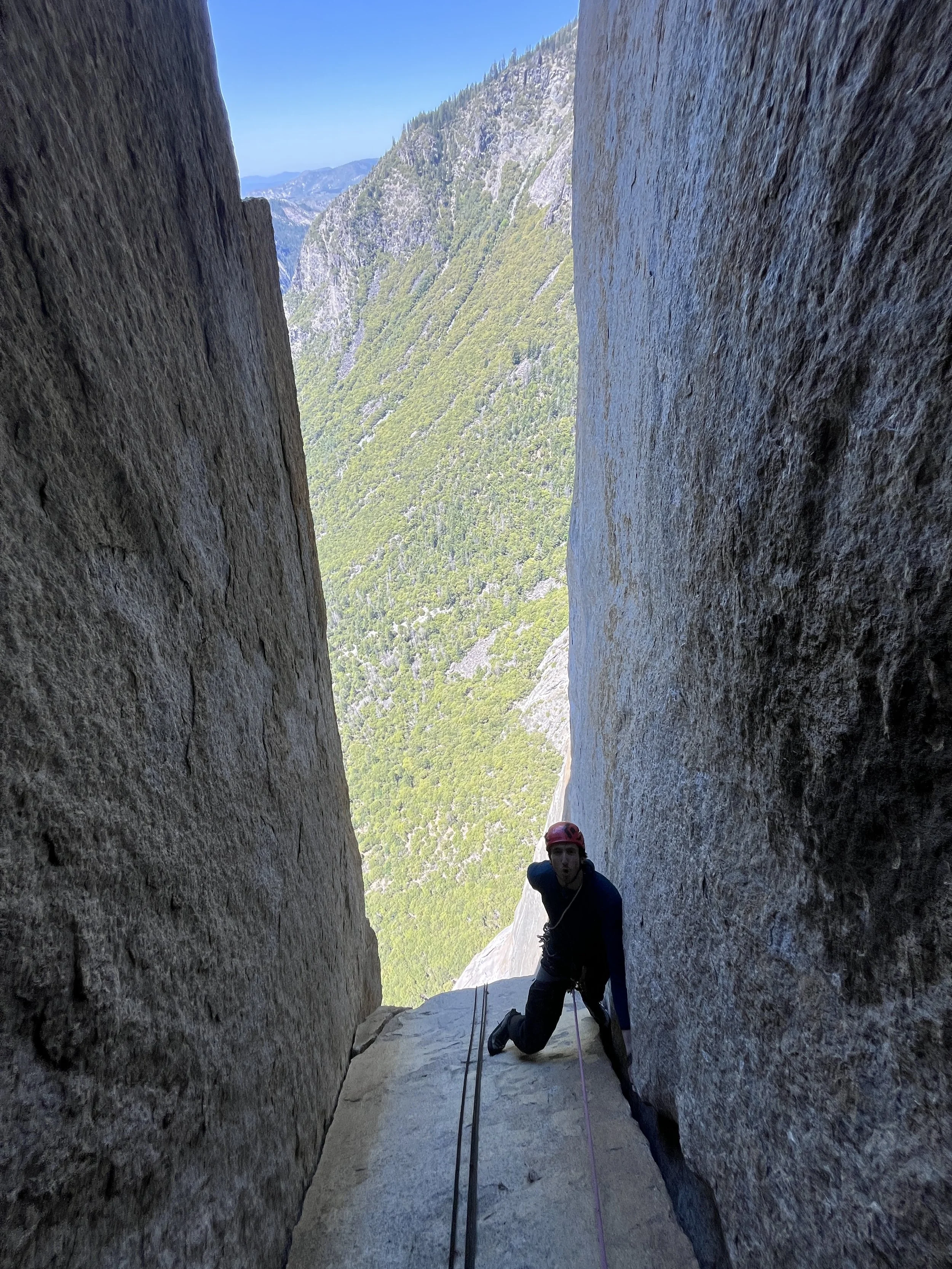
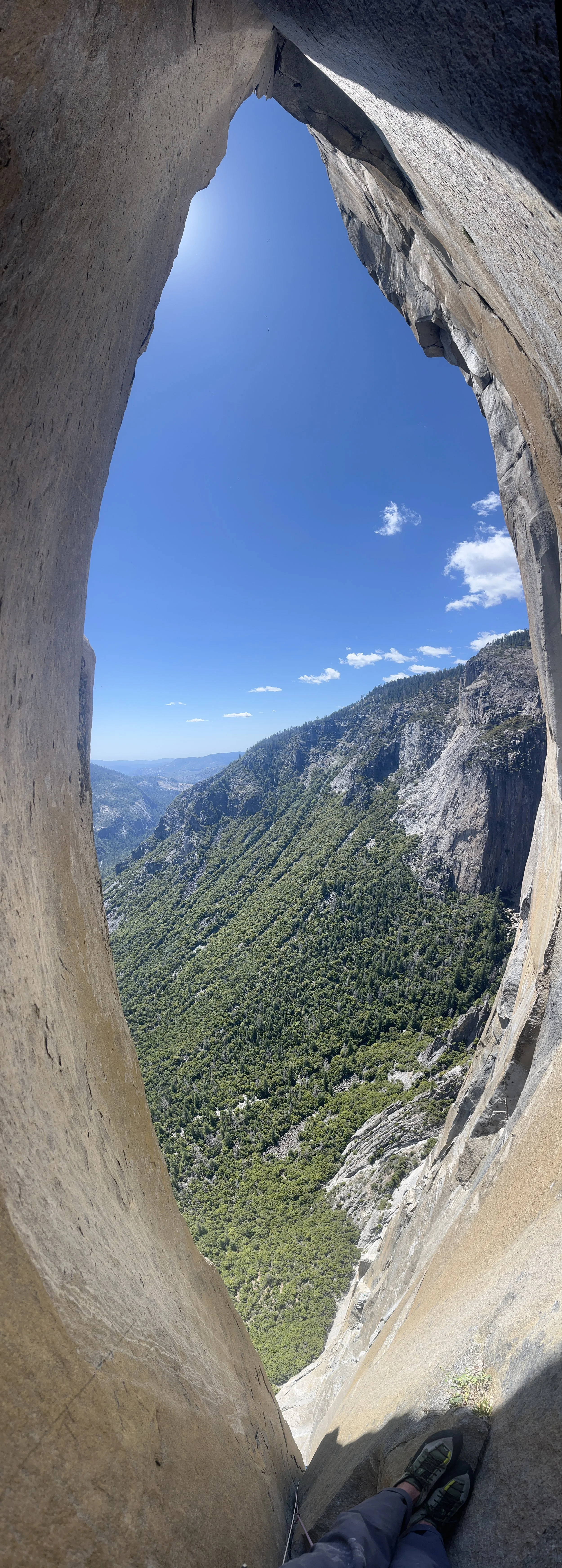
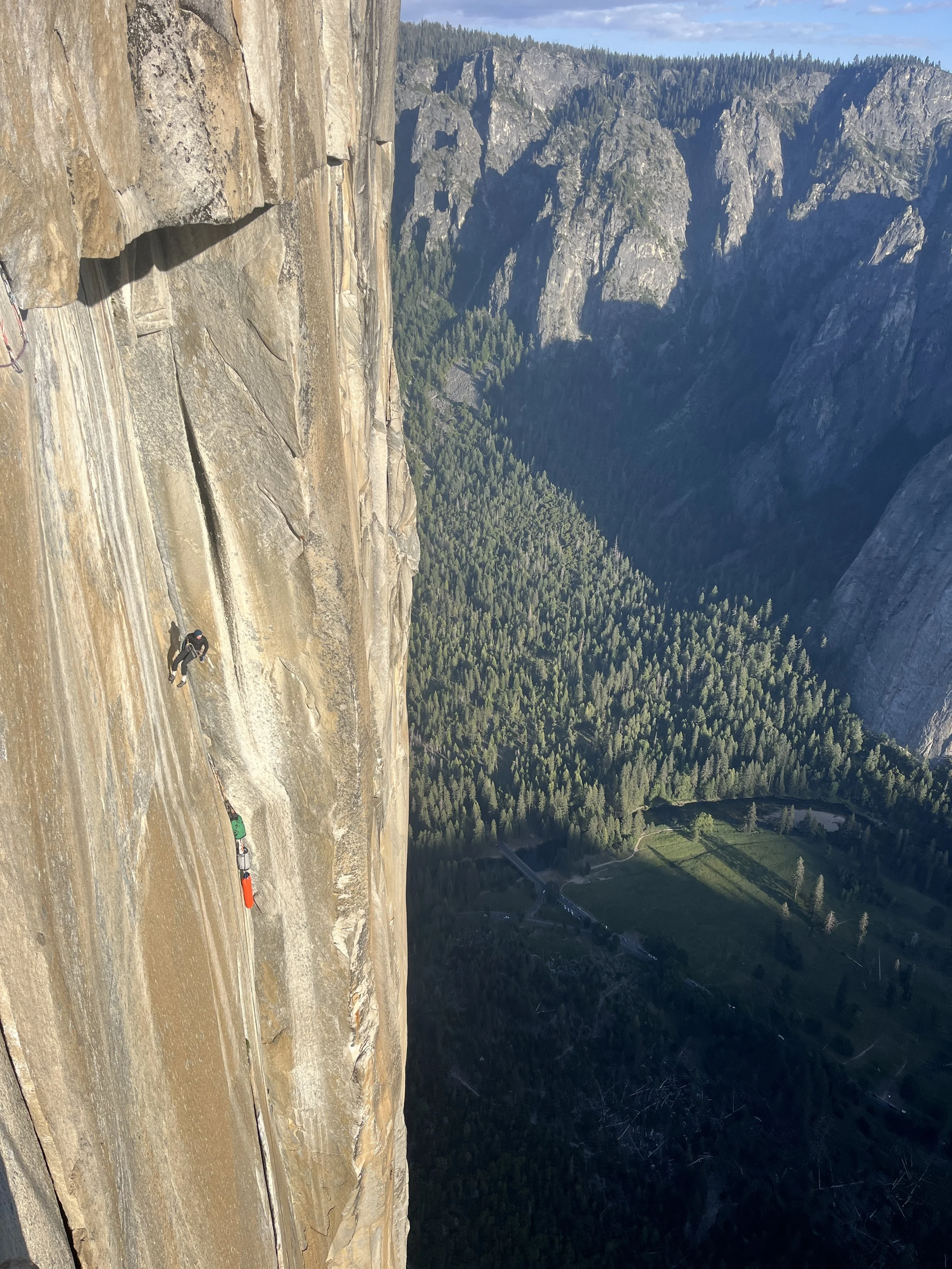
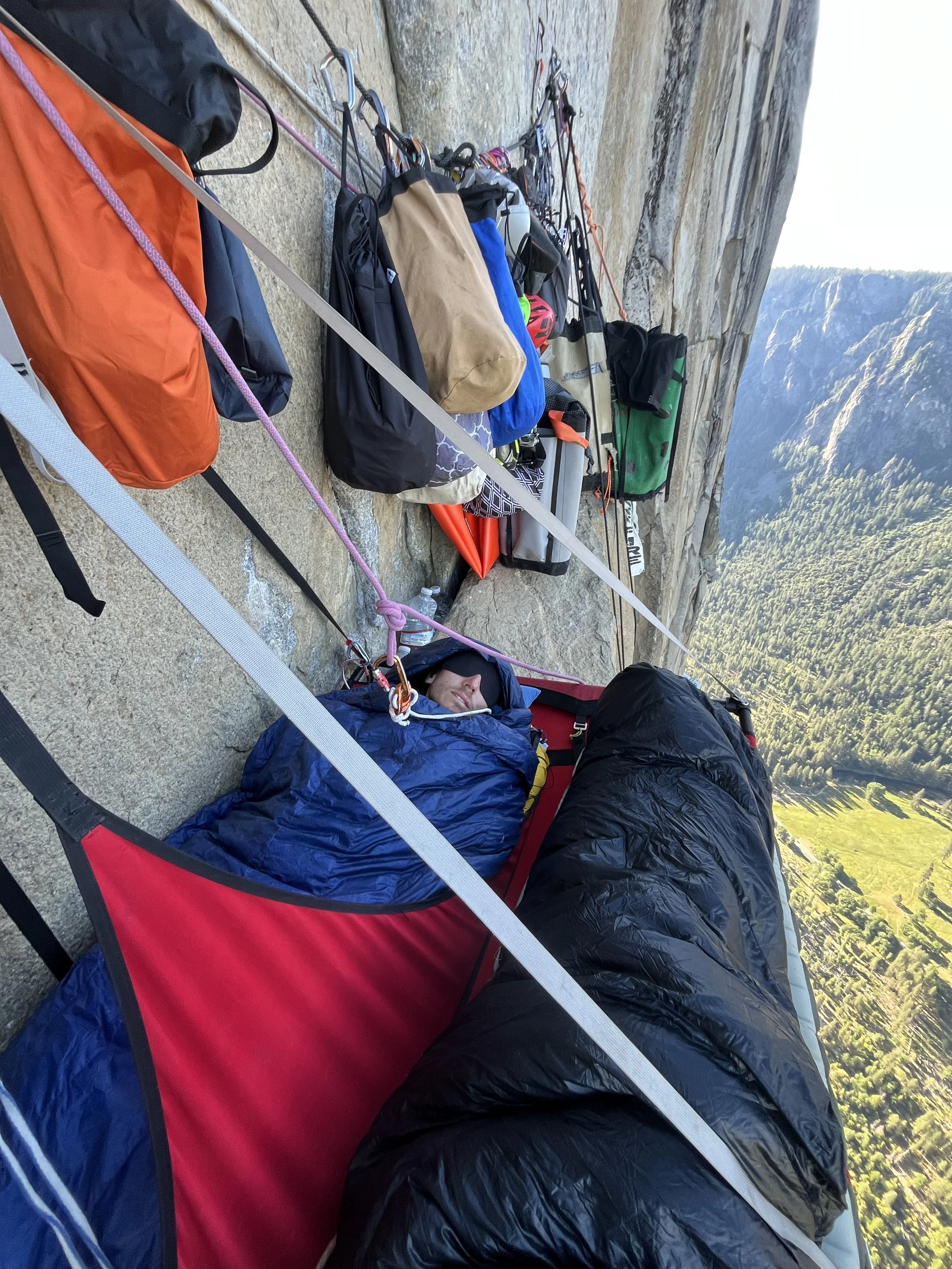
From our bivy, one pitch of 5.12c slab leads to a massive corner system of mostly 5.10 climbing that terminates at the El Corazón Roof (This corner system can be seen fairly well in the image of my previous post). Julian and I both climbed the slab first go, then worked up the corner system through some of the most physical 5.10 of my life. Sandwiched between the 5.10 was the “Kierkegaard Chimney”, a 5.12b wide pitch that turned out to be one of the most tiering pitches I have ever climbed. We were both relieved to climb it first go. It is the kind of pitch that simultaneously makes you want to give up and refuse to let go, knowing full well you do not want to repeat it. Perhaps the worst part for me was that the #6 I brought to protect the first half of the pitch needed lubrication and didn’t fully retract/engage. I guess it has been a while since I last used the thing… wups.
From the top of the Kierkegaard, we executed a fifi-release haul, leaving the bags on an open hook as we climbed two pitches before releasing it from above. I was extremely psyched on this little tactic and felt fairly blissed out as we climbed splitter 5.10 hand crack culminating at another wide pitch called the Nietzsche Chimney. This was essentially the 5.10 version of the Kierkegaard, but it still managed to reopen the bloody knee wounds and fears of the #6 not engaging from the pitch below.
From there, we stood at the base of the next two 5.13 pitches, climbed through them without clean sends, and arrived at Tower to the People Ledge, earlier than expected but exhausted.
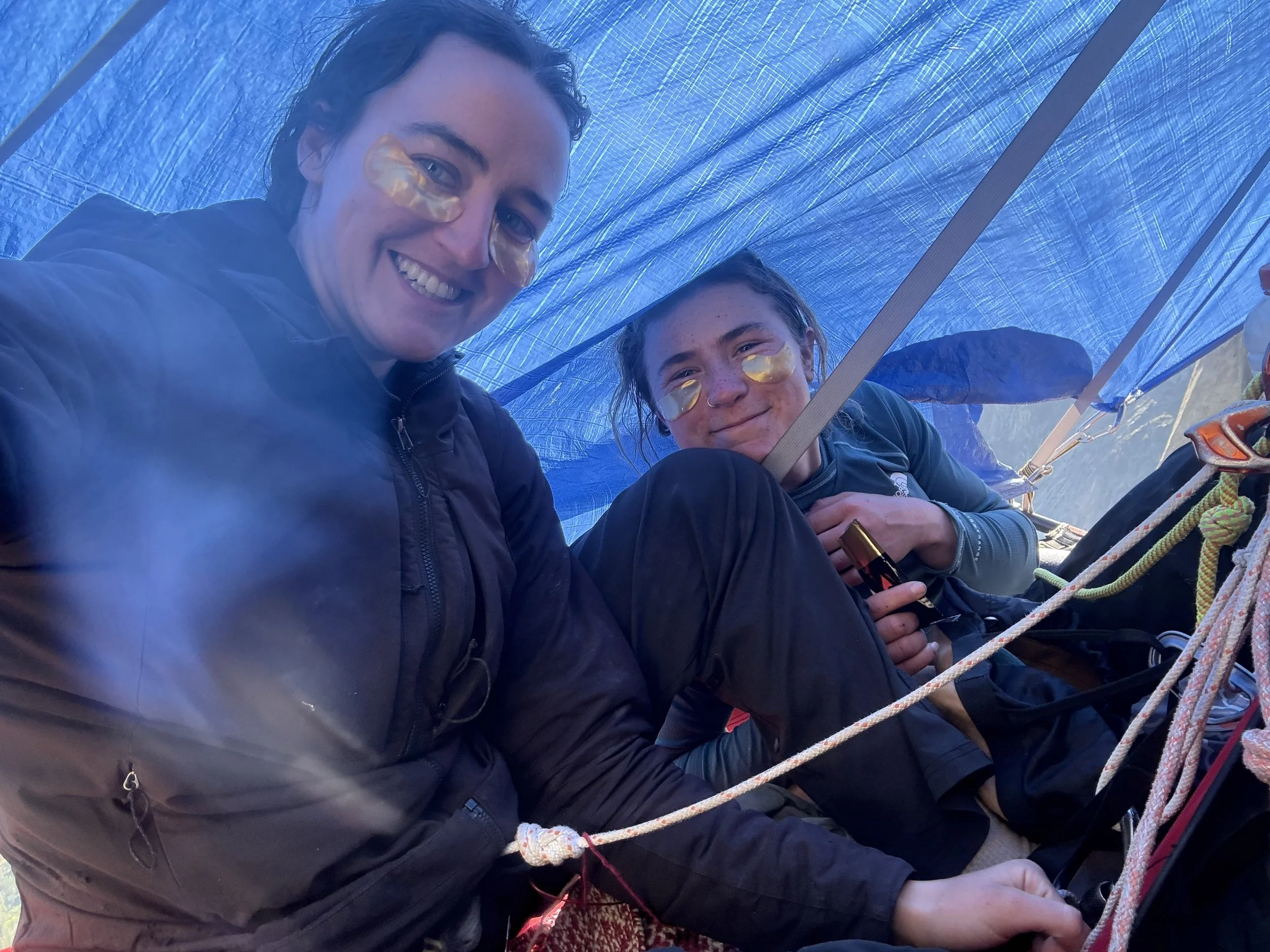
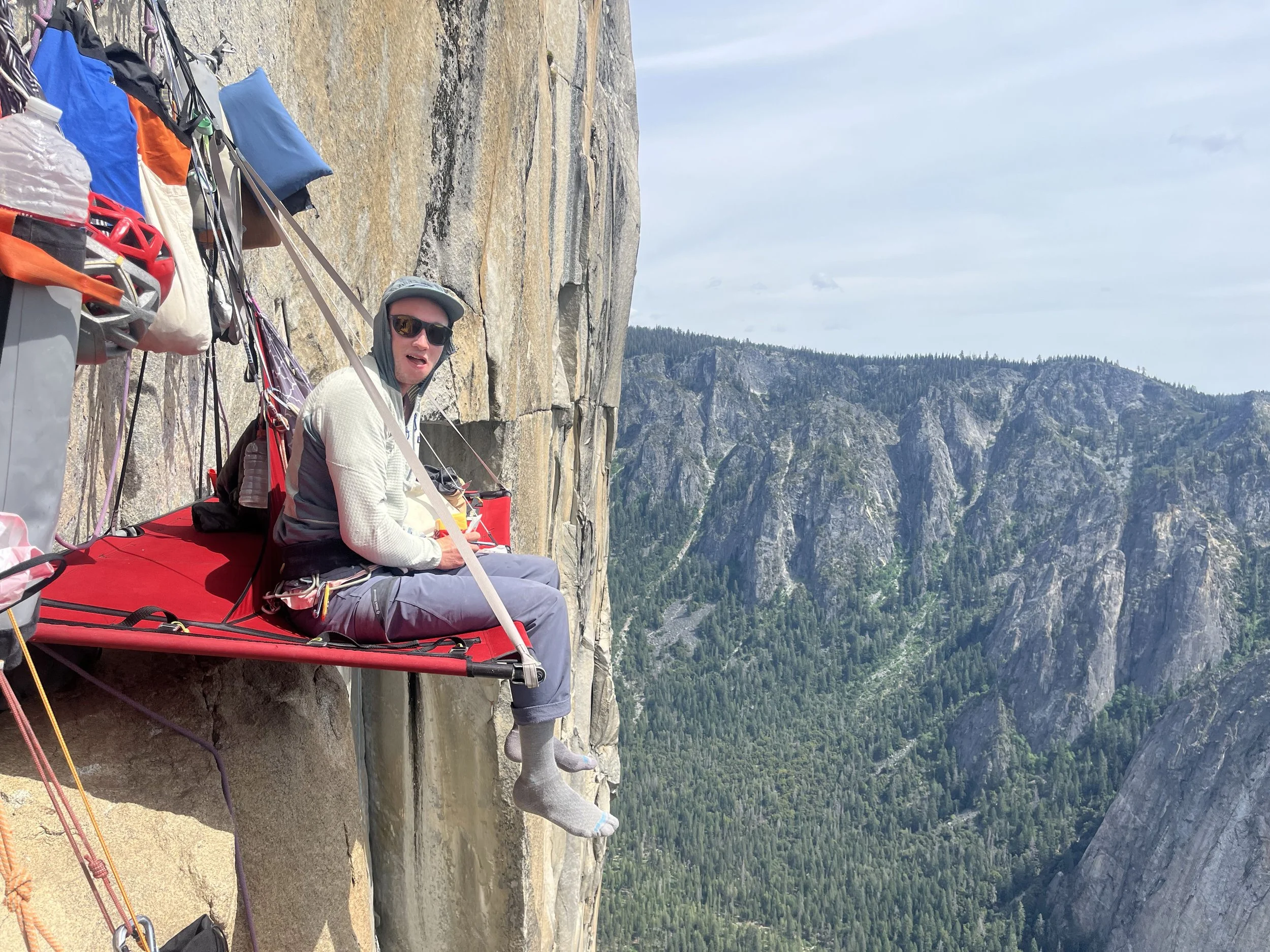
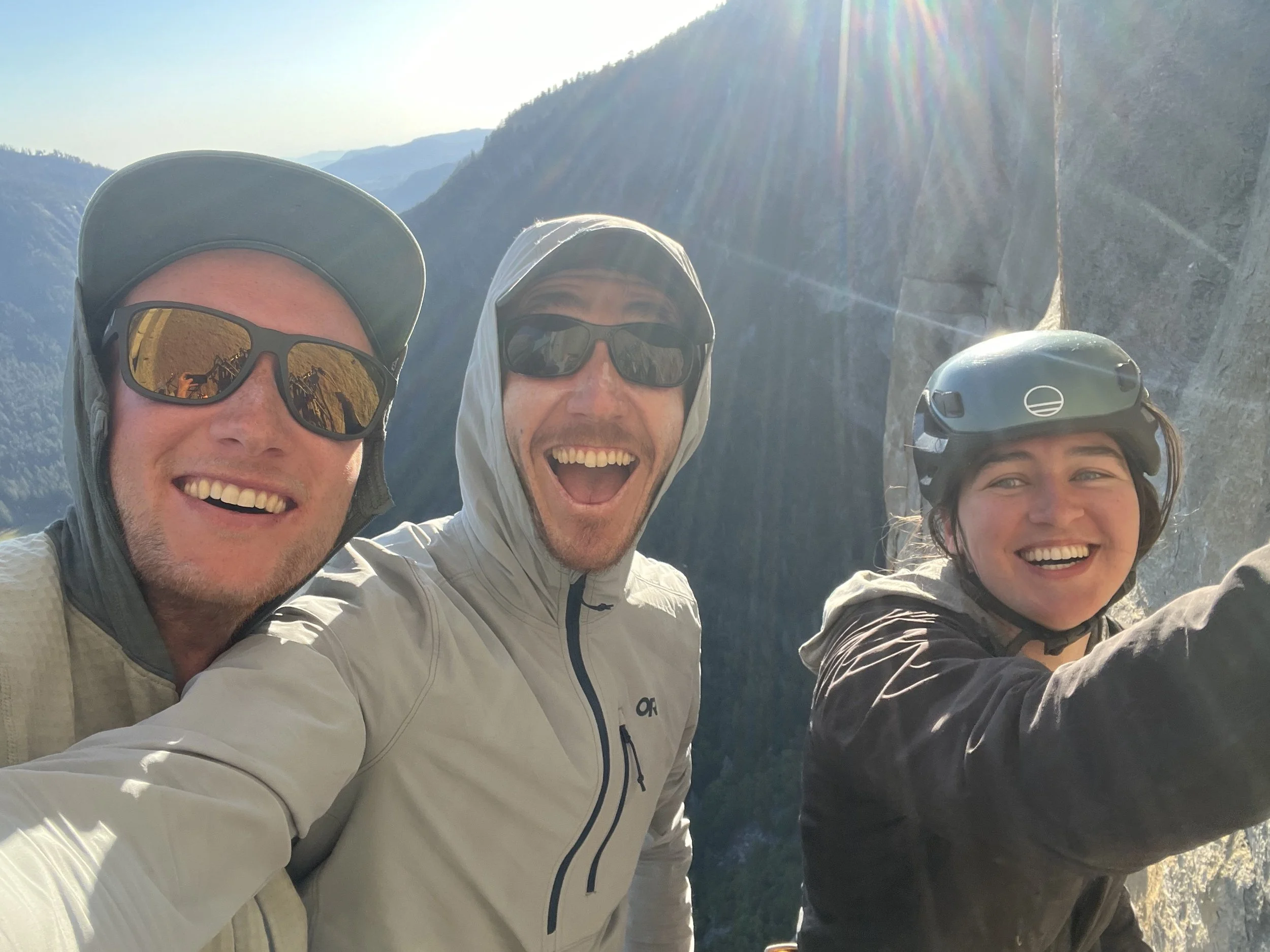
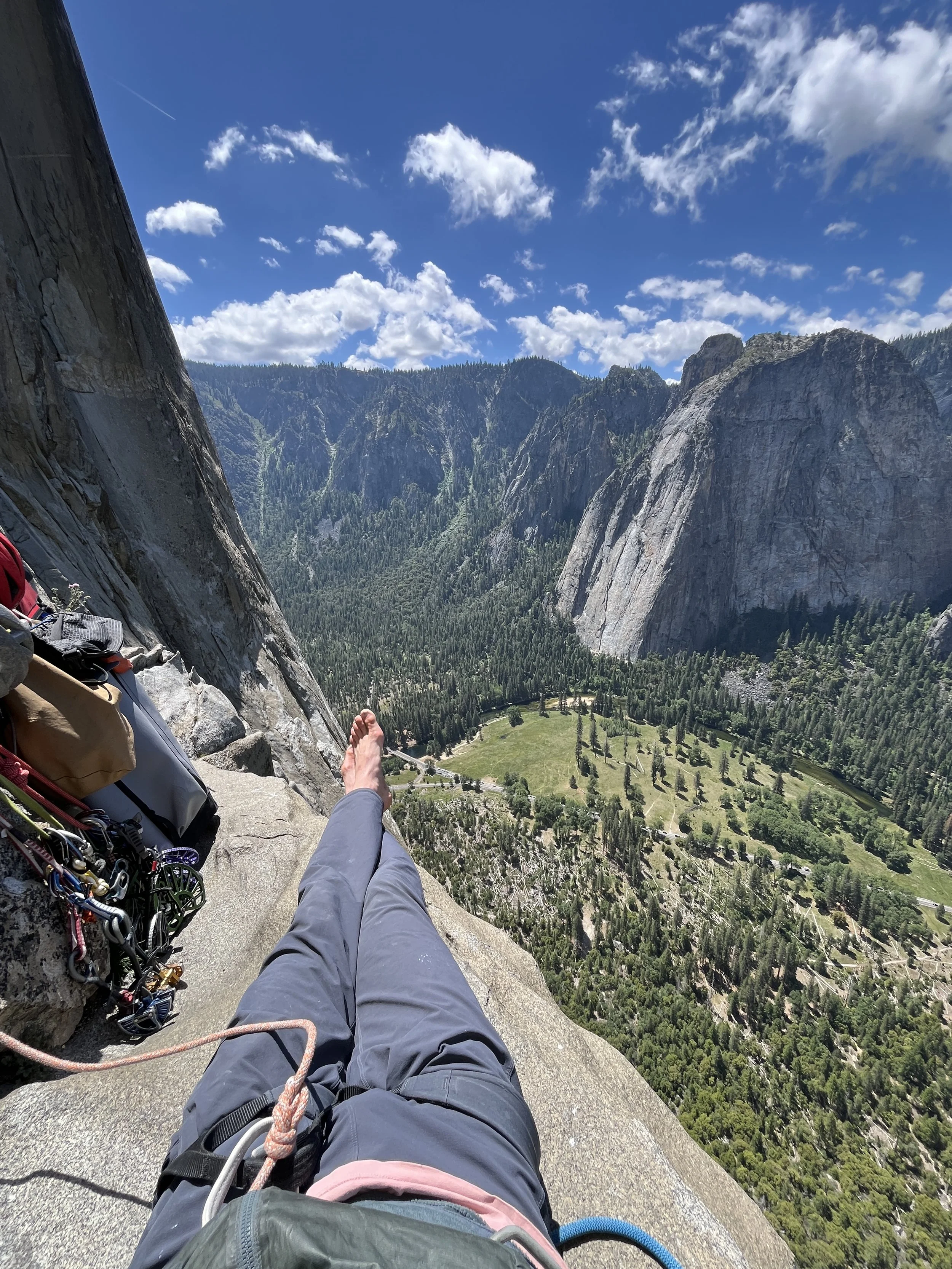
On the fifth day, we rested.
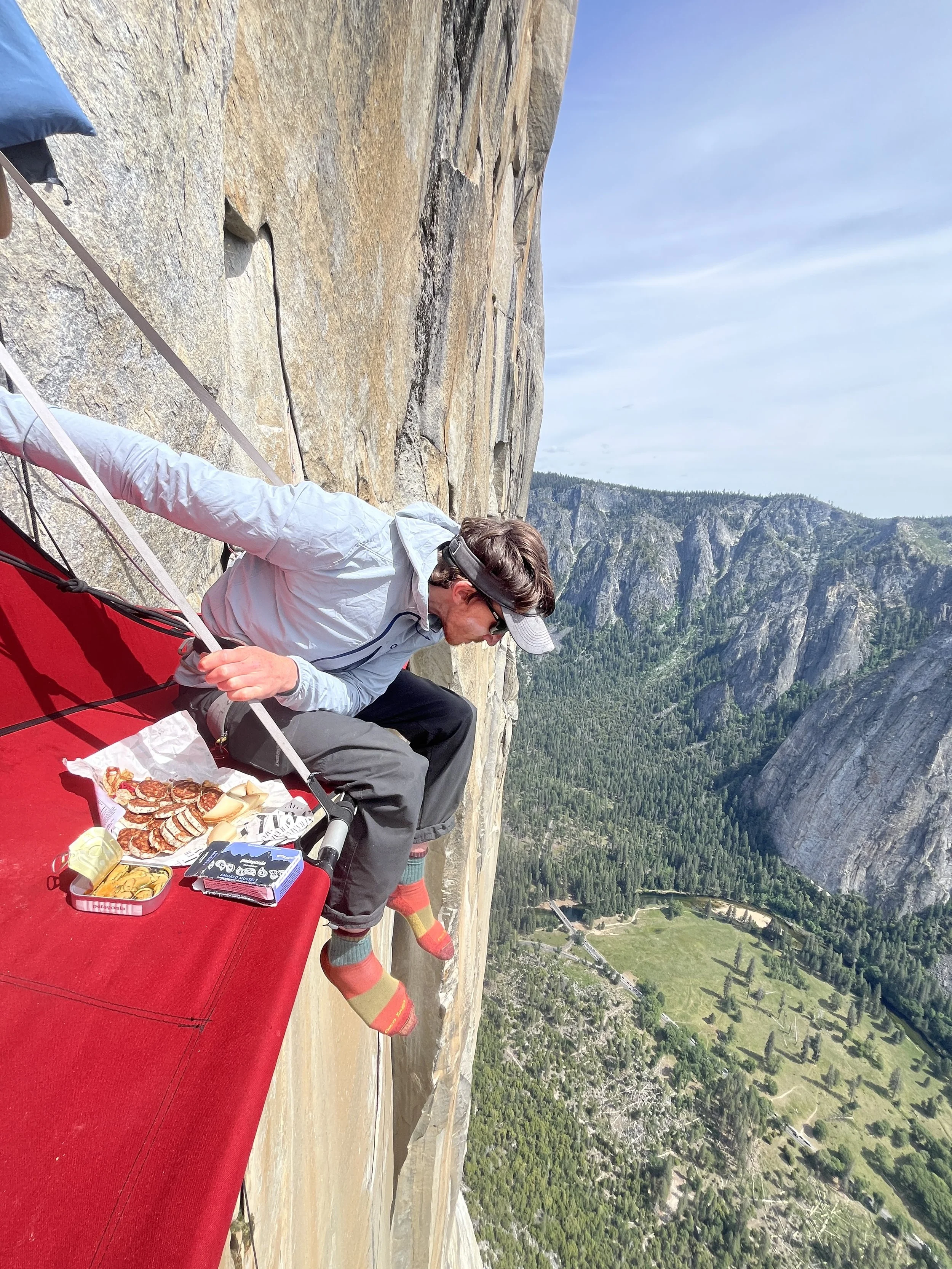
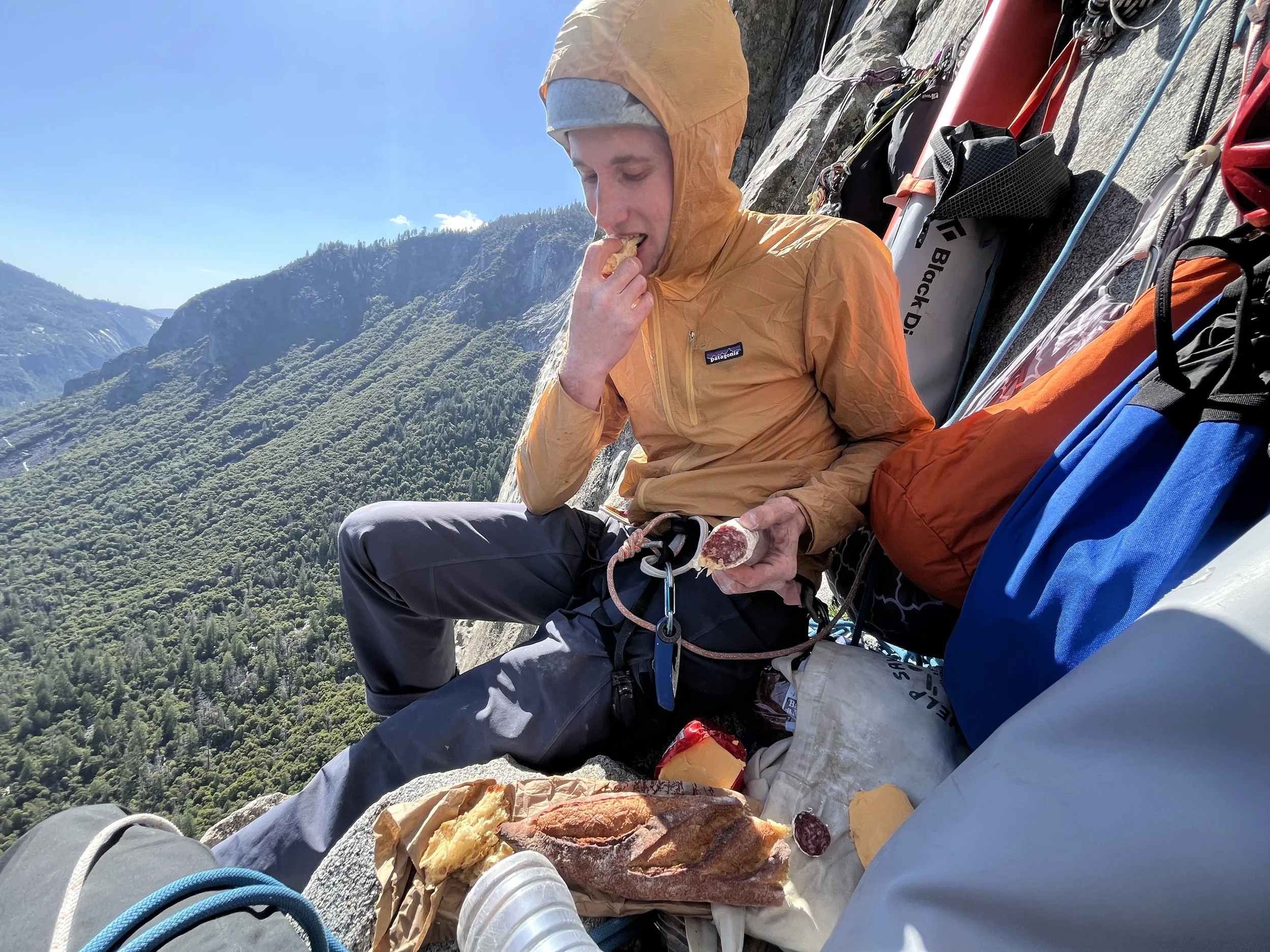
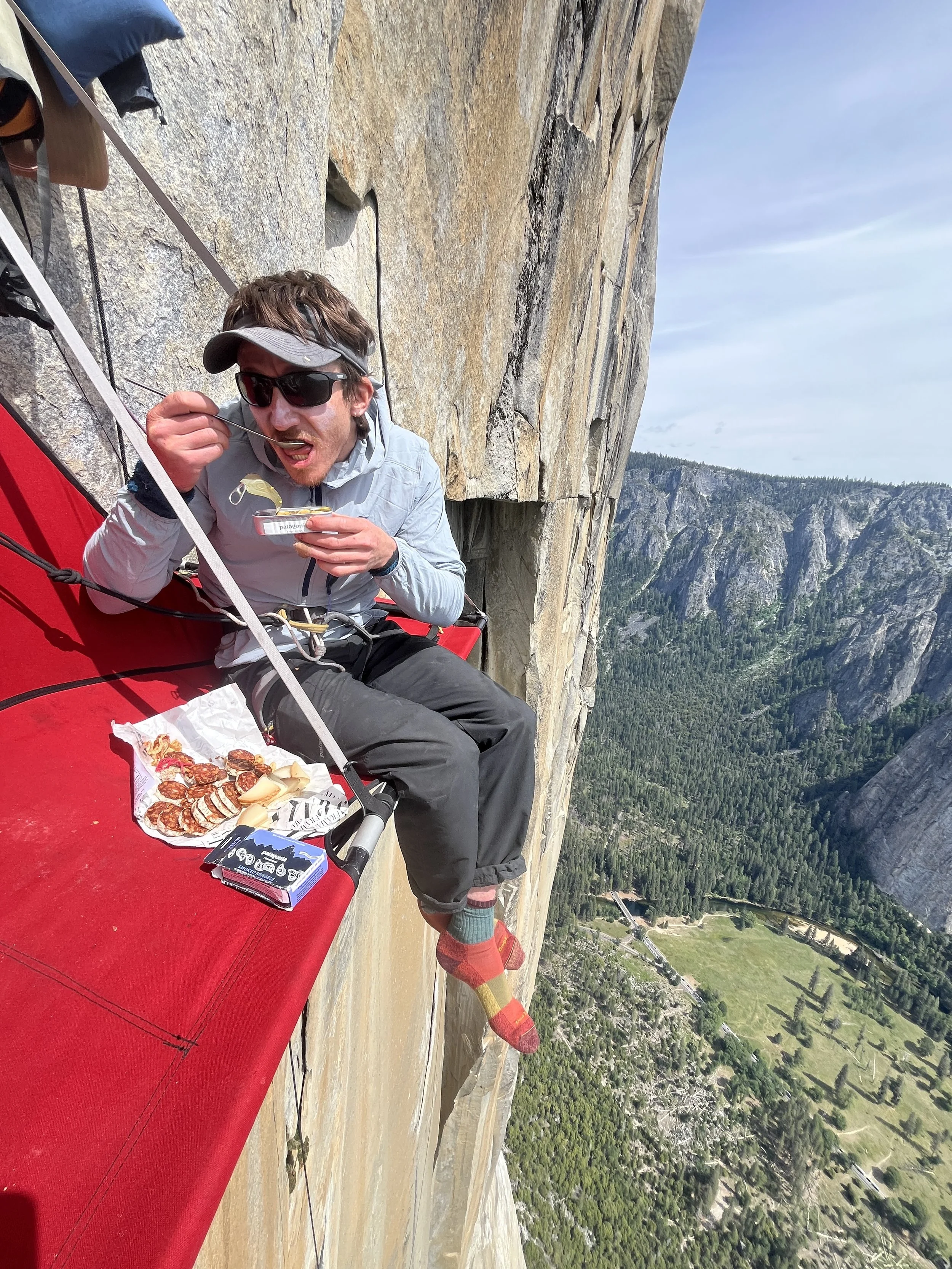
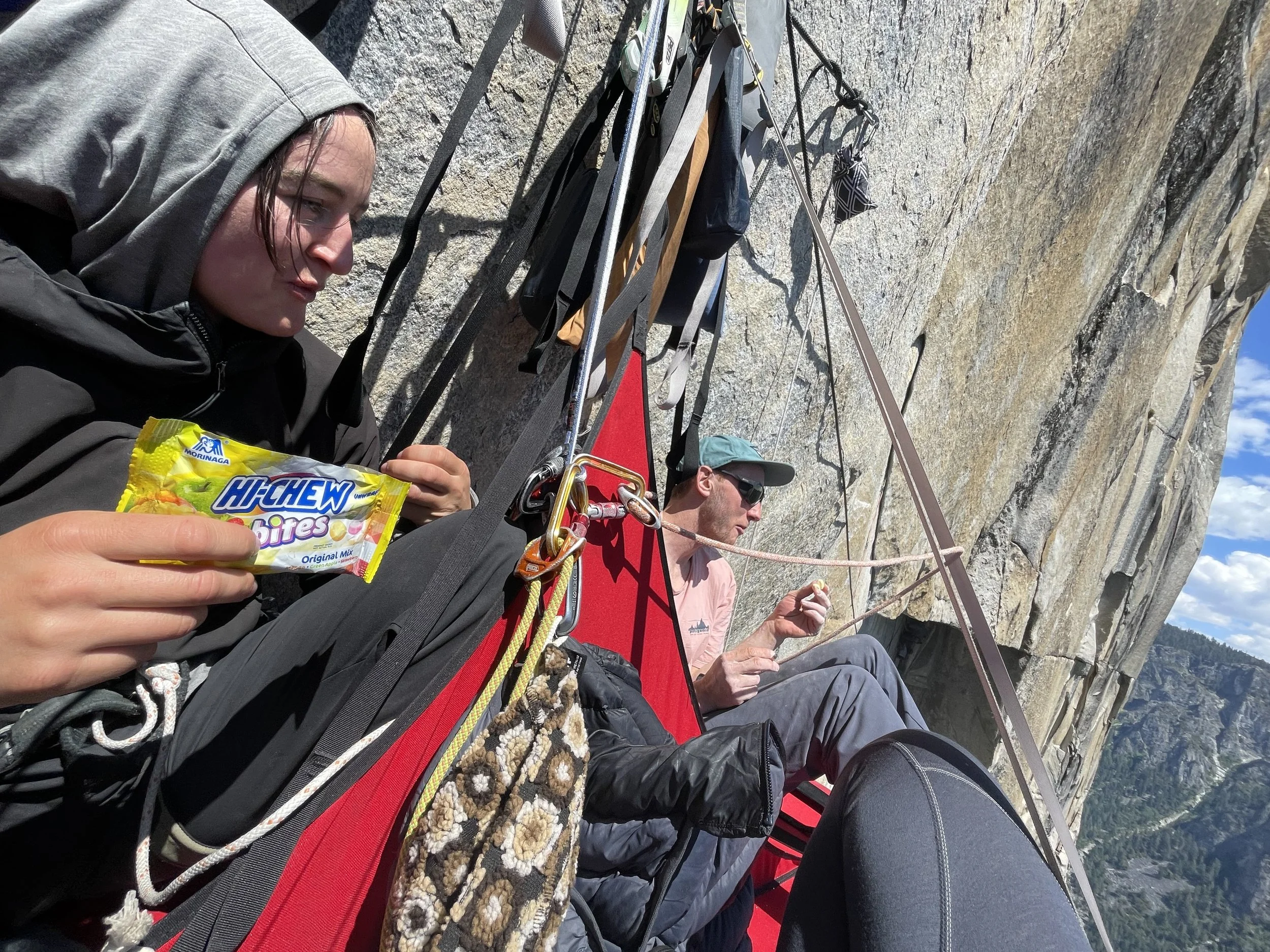
I had never taken a full rest day on El Cap before, and it was glorious. As we lounged, we focused on eating well while watching our friends Fiona and Ari climb up the middle pitches of Golden Gate. Julian handled the food shopping and absolutely crushed it, bringing up fresh fruit, good cheese, bread, salami, a jar of honey, plenty of snacks, and some excellent tin fish from Patagonia Provisions. There is something about eating well on a big wall that brings me a lot of joy.
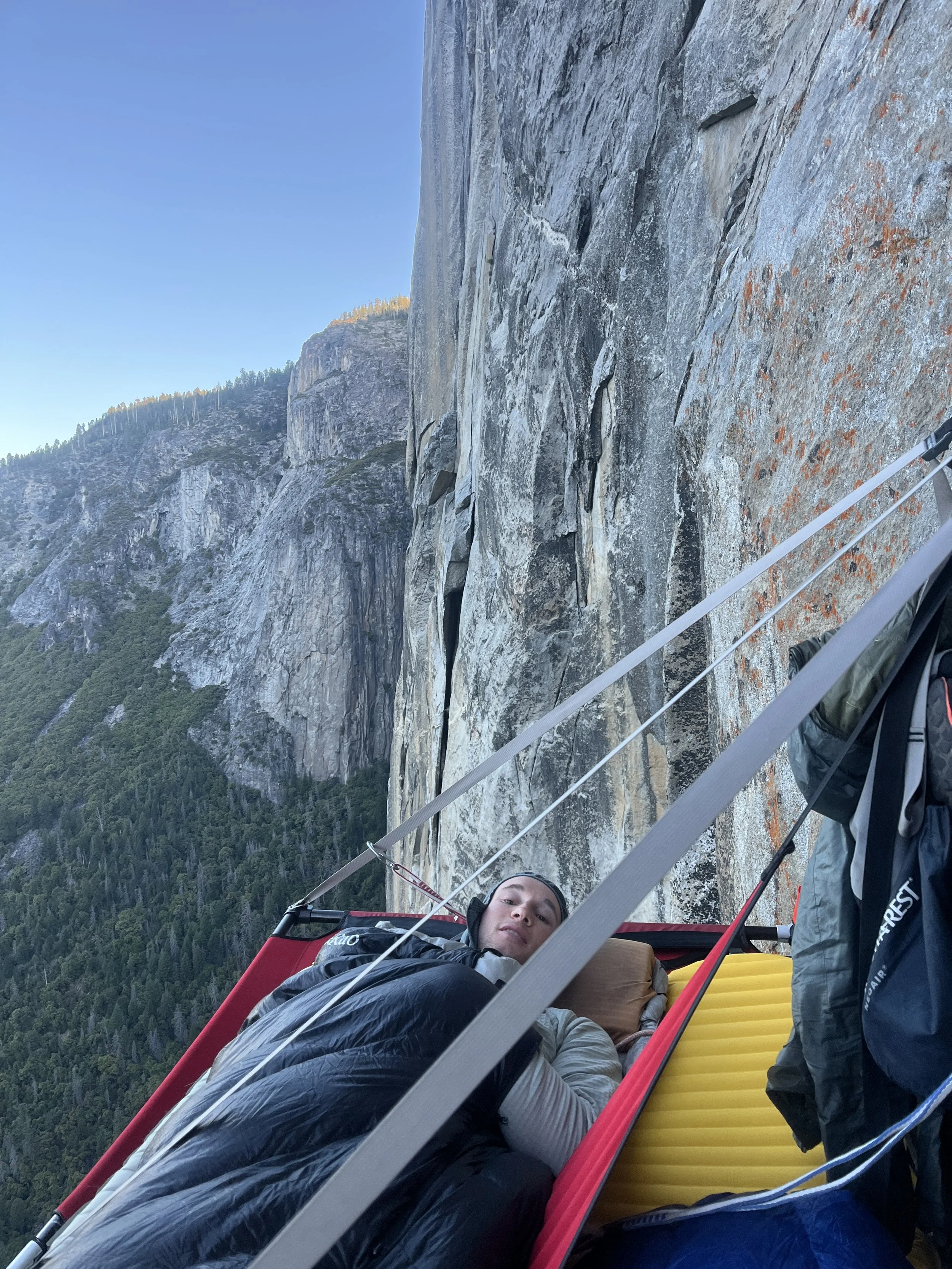
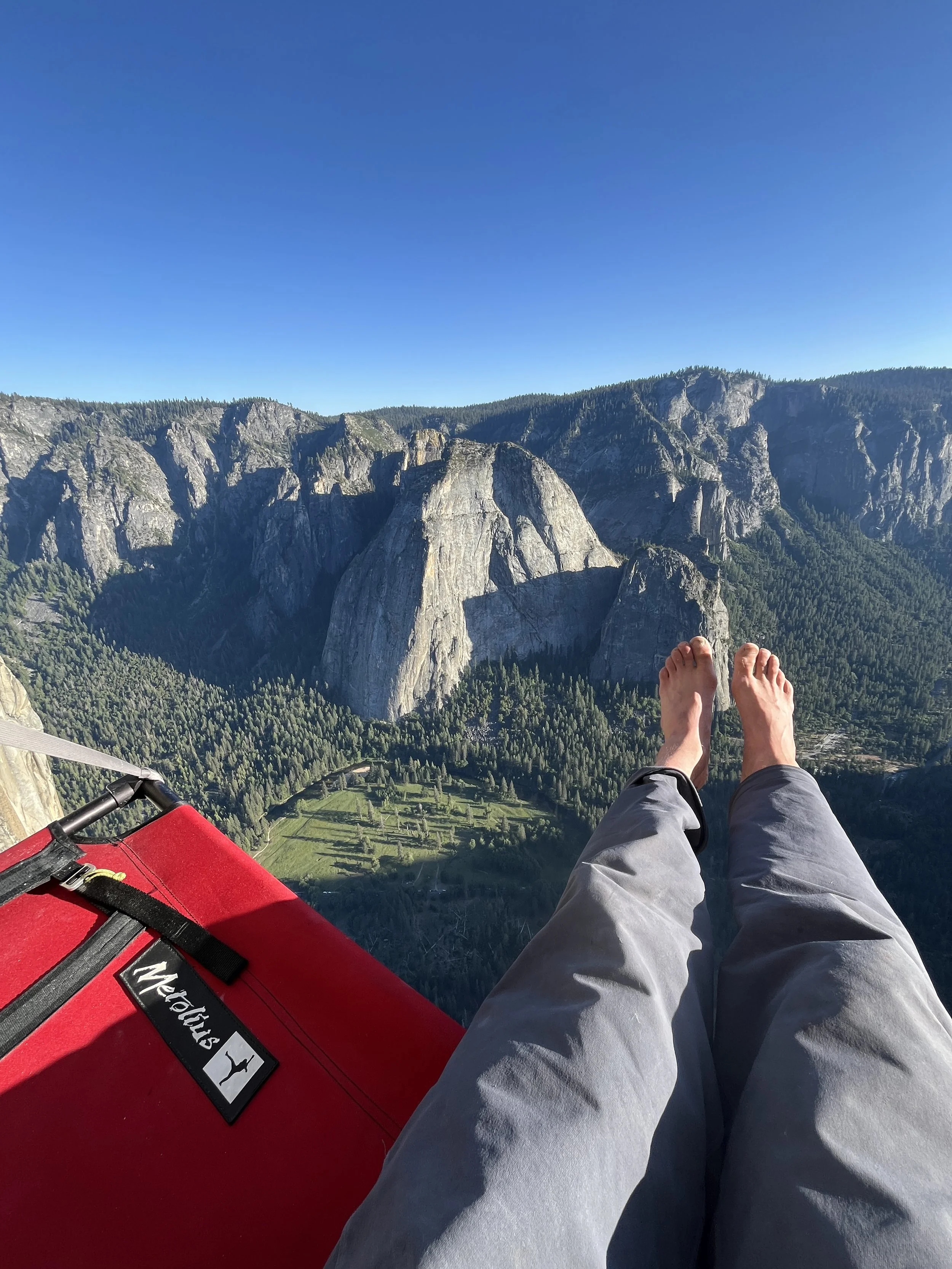
I stayed in my sleeping bag until nearly noon, deeply grateful to have brought up a proper portaledge. Inflatable ledges may be all the rage these days, but framed ledges are honestly the better option for most El Cap climbing.
Julian and I both sent the Coffee Corner second go the next morning, and moved up to the El Corazón Roof, a straight 100-foot horizontal traverse under a massive roof feature with some of the most wild and unique climbing I have ever encountered.
Because of the horizontal nature of the pitch, it makes sense to leave gear fixed, essentially turning it into a sport climb with a cam to clip every five feet or so (that is unless you were to send it first go). I climbed it first, wedging my foot in the corner of the roof to reduce the load on my arms, a technique known as a heel-toe cam that worked surprisingly well. After a sussing go, I felt confident I could send it. I fell near the end of the crux on my first redpoint burn but sent it the following go.
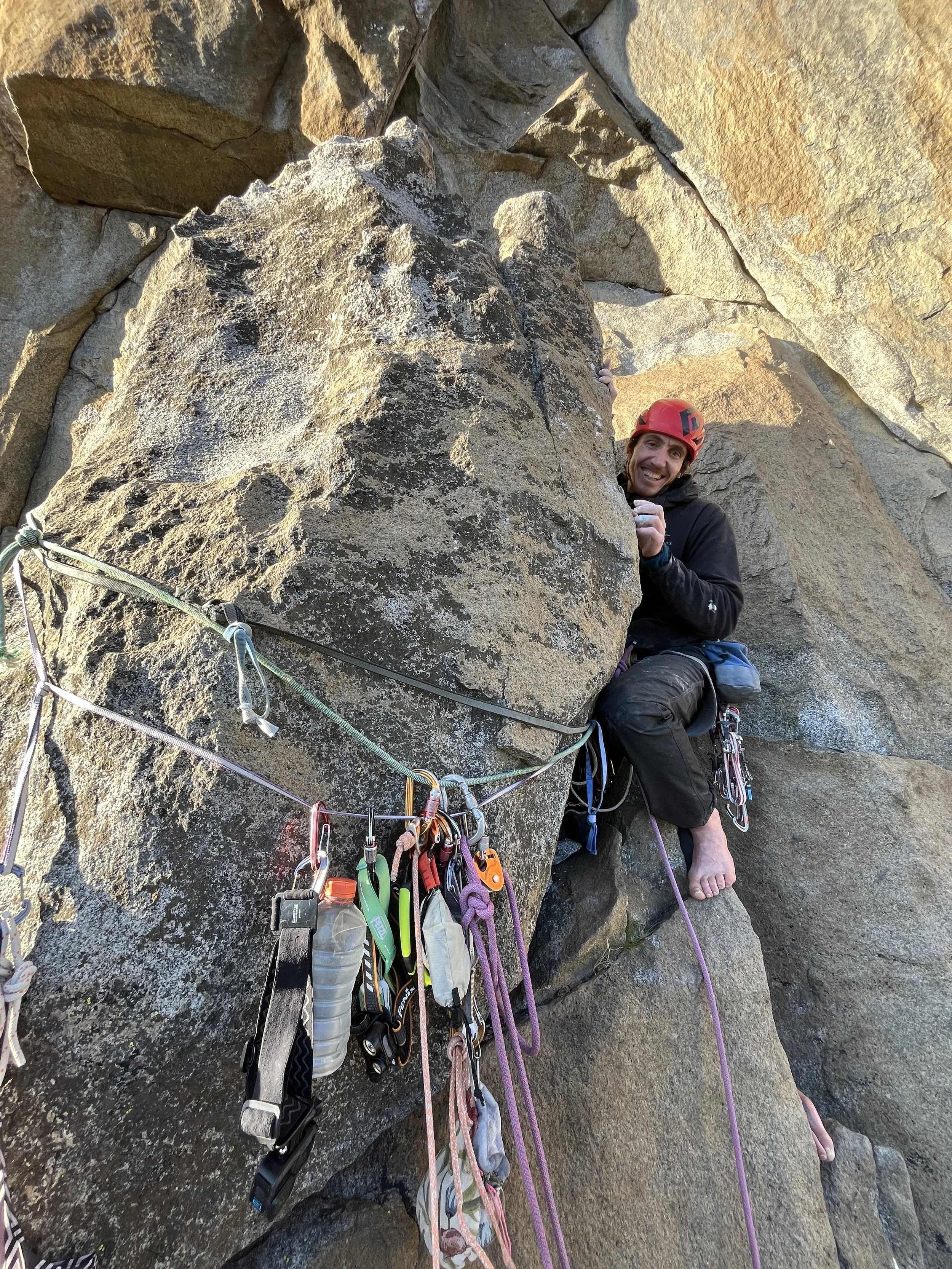
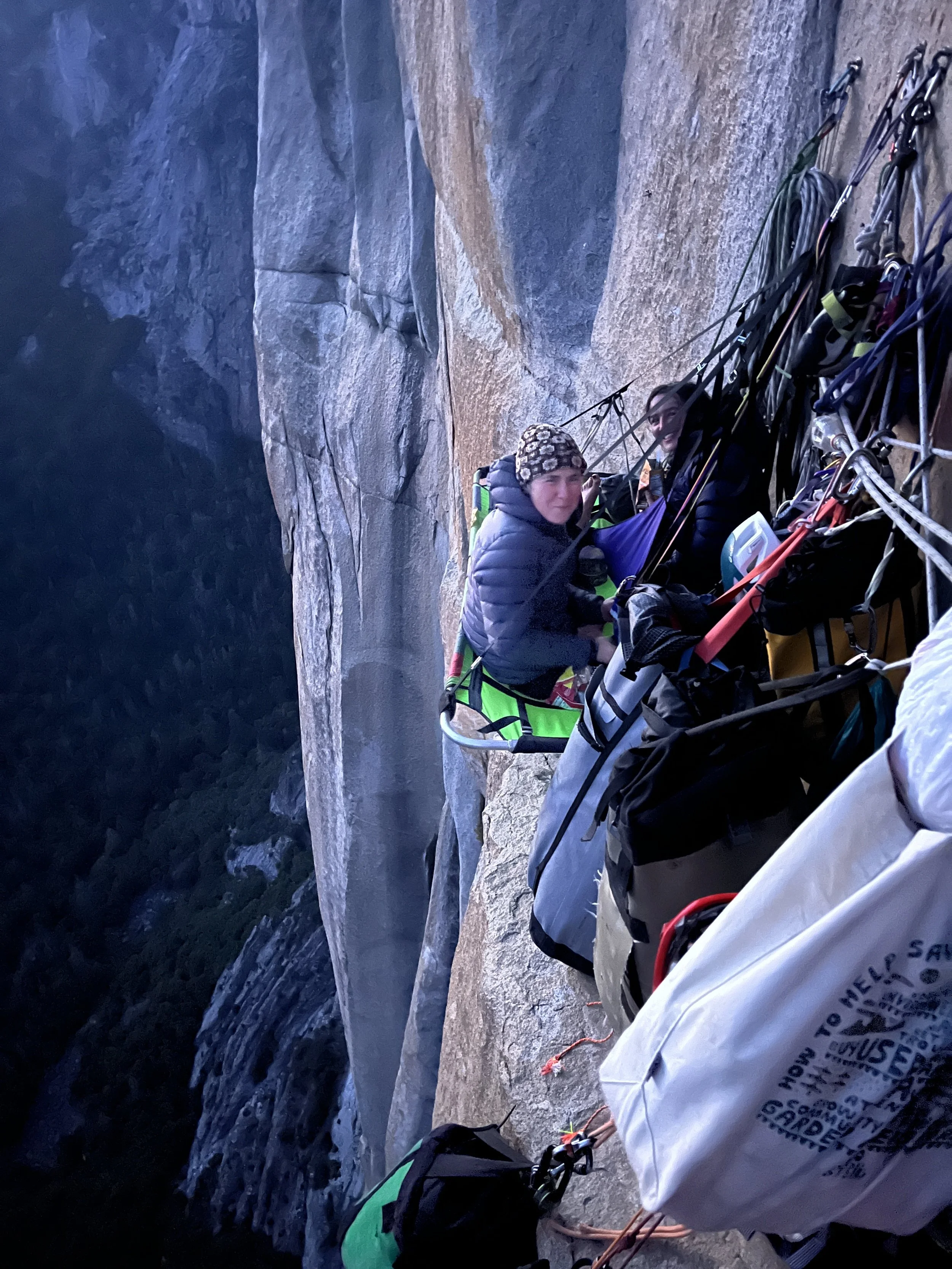
That day, Fiona and Ari arrived on Tower to the People Ledge and the four of us spent the afternoon all hanging out on one portaledge. It was truly a 10/10 hang that lifted our spirits and brought an influx of good vibes to an already heightened atmosphere of high psych. We shared food, music, tape, super glue, and ibuprofen, as we geared up to keep projecting the 5.13 pitches above and below with our deteriorating skin.
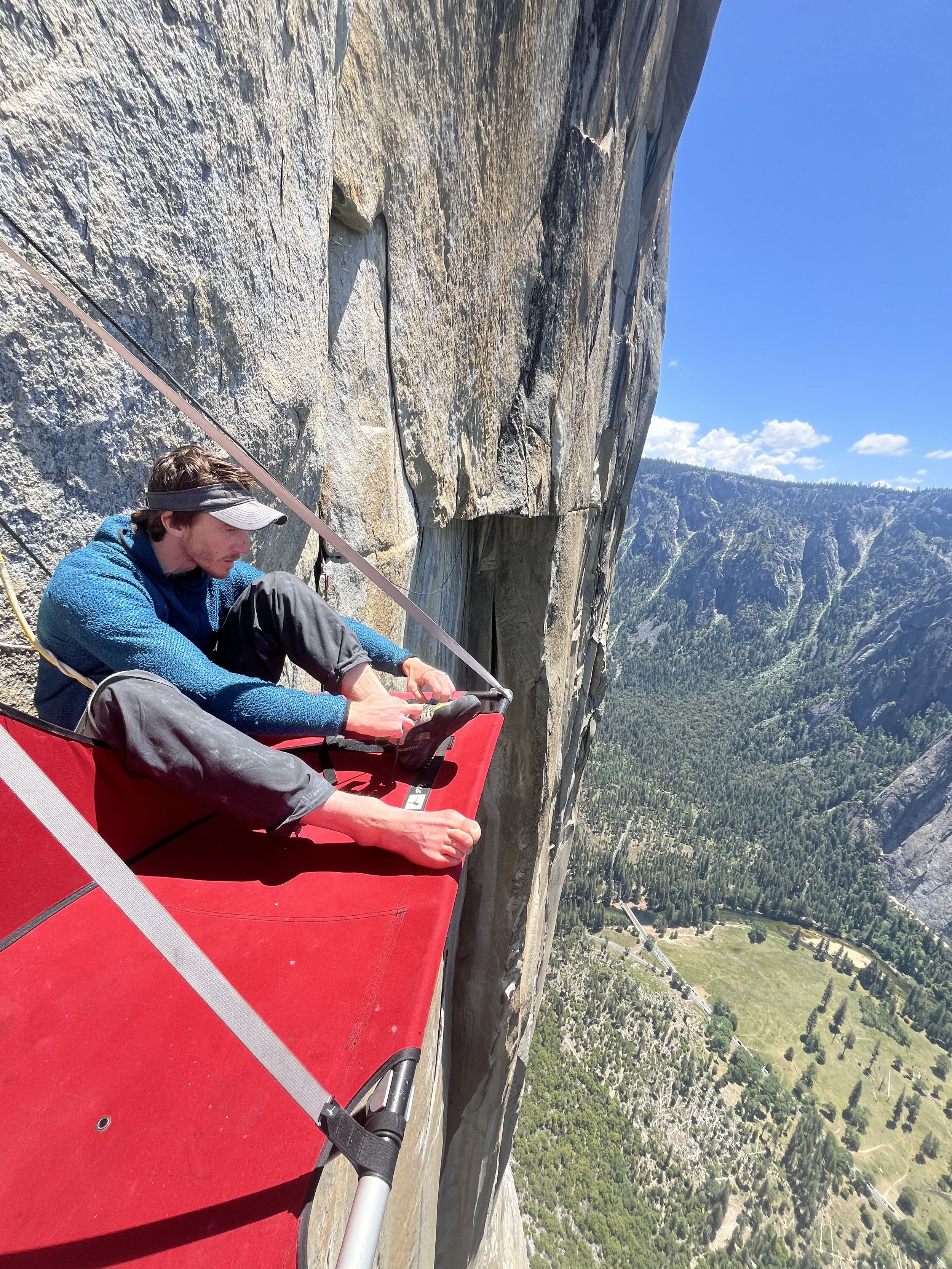
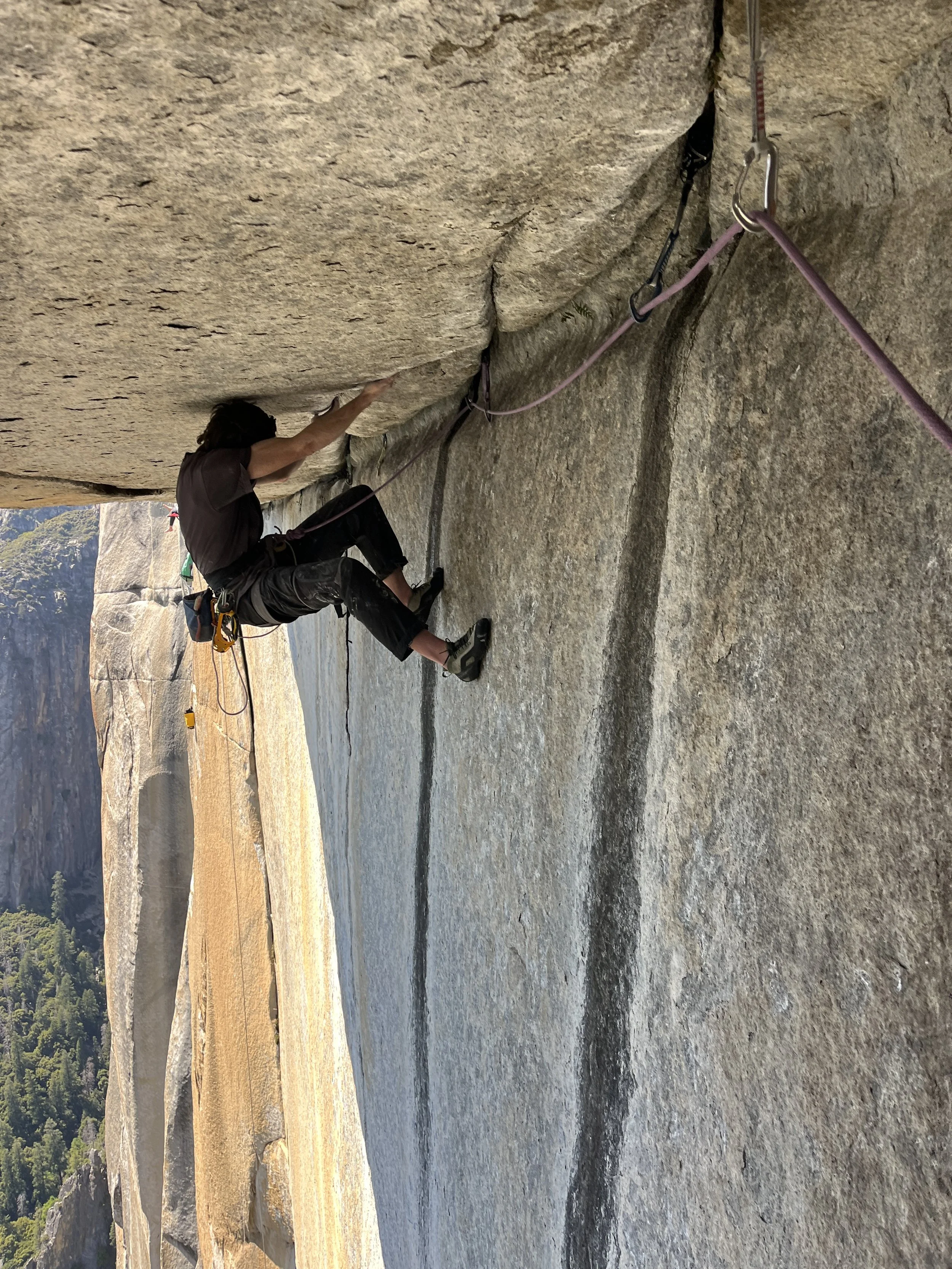
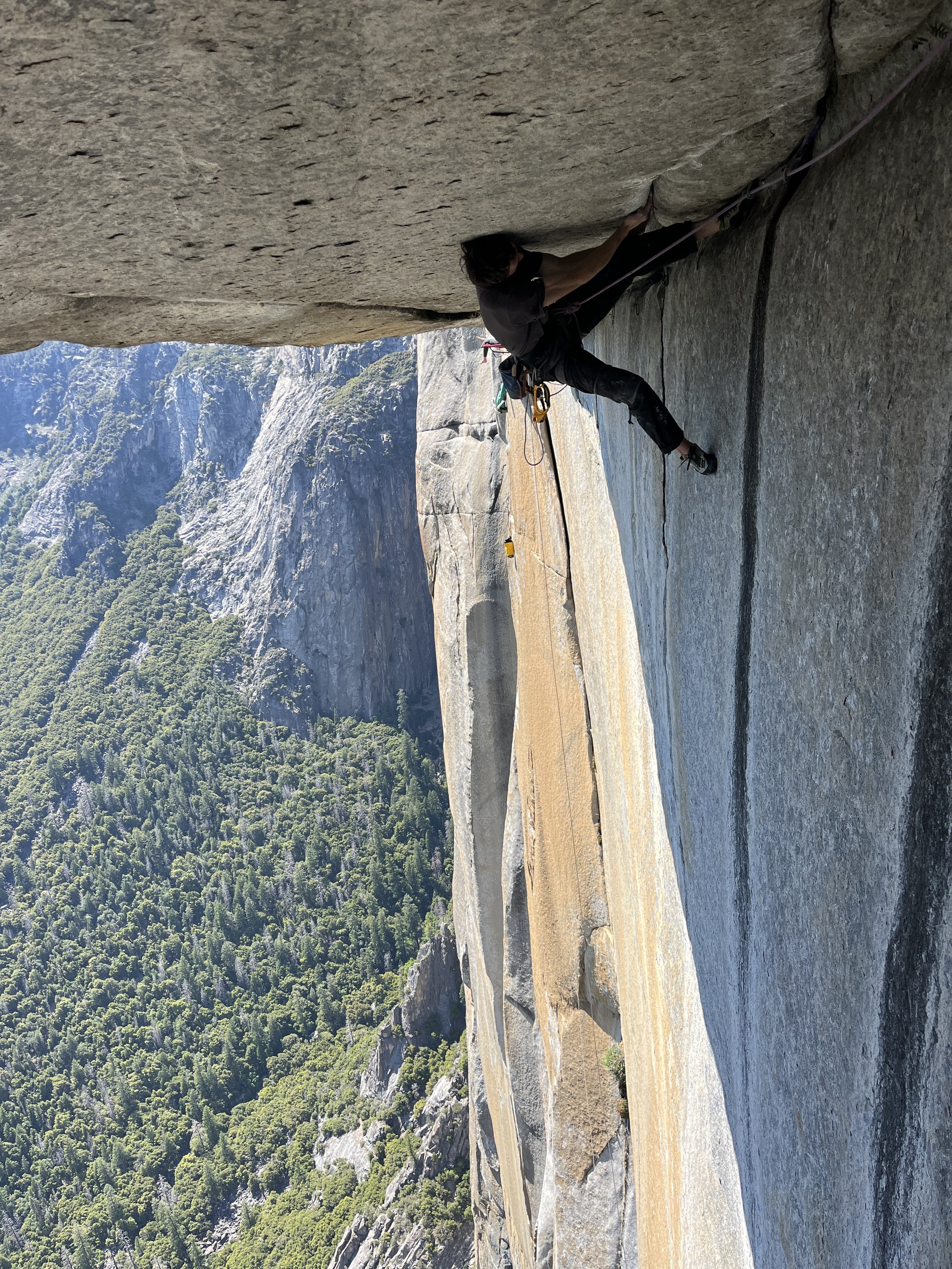
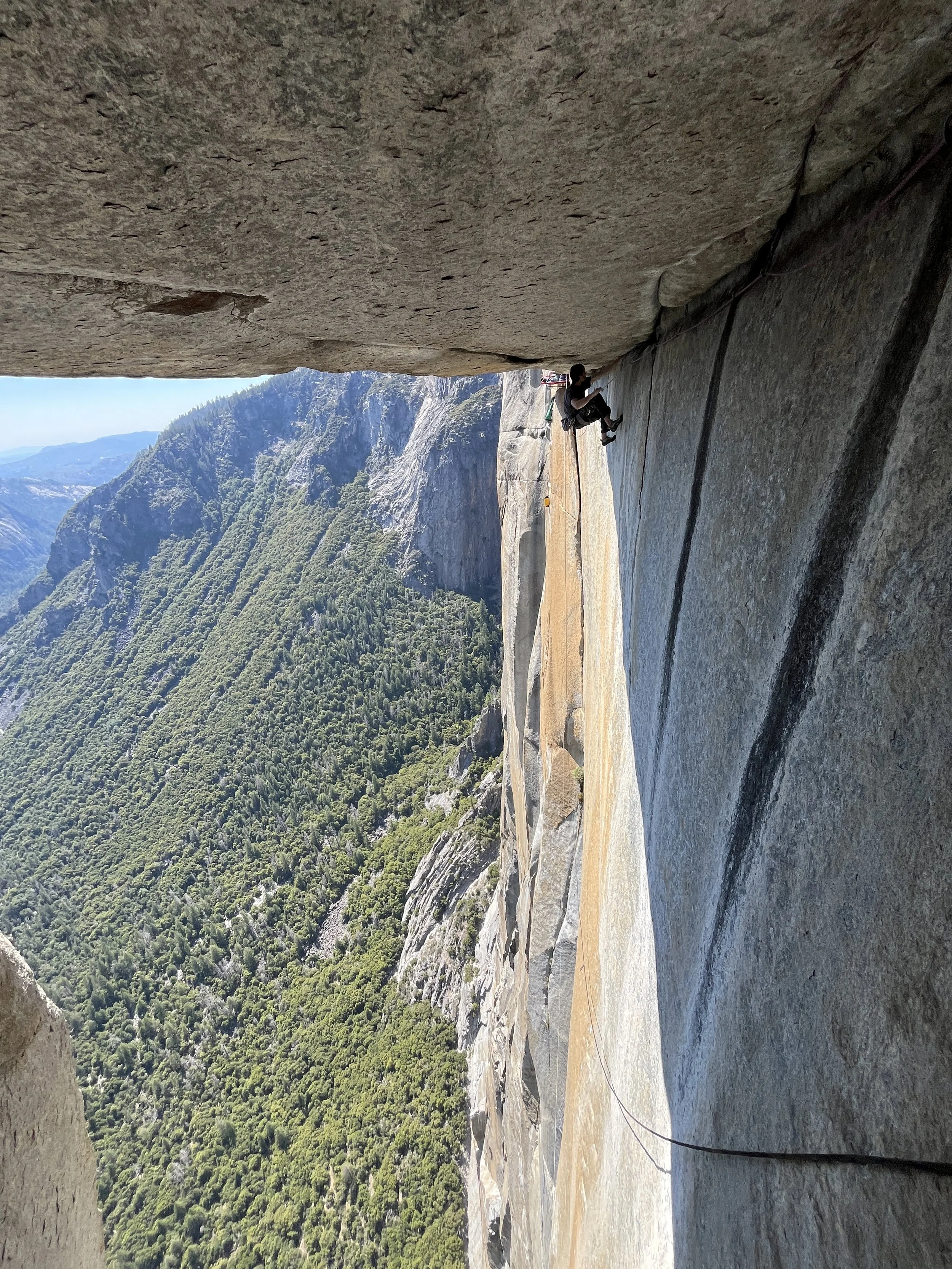
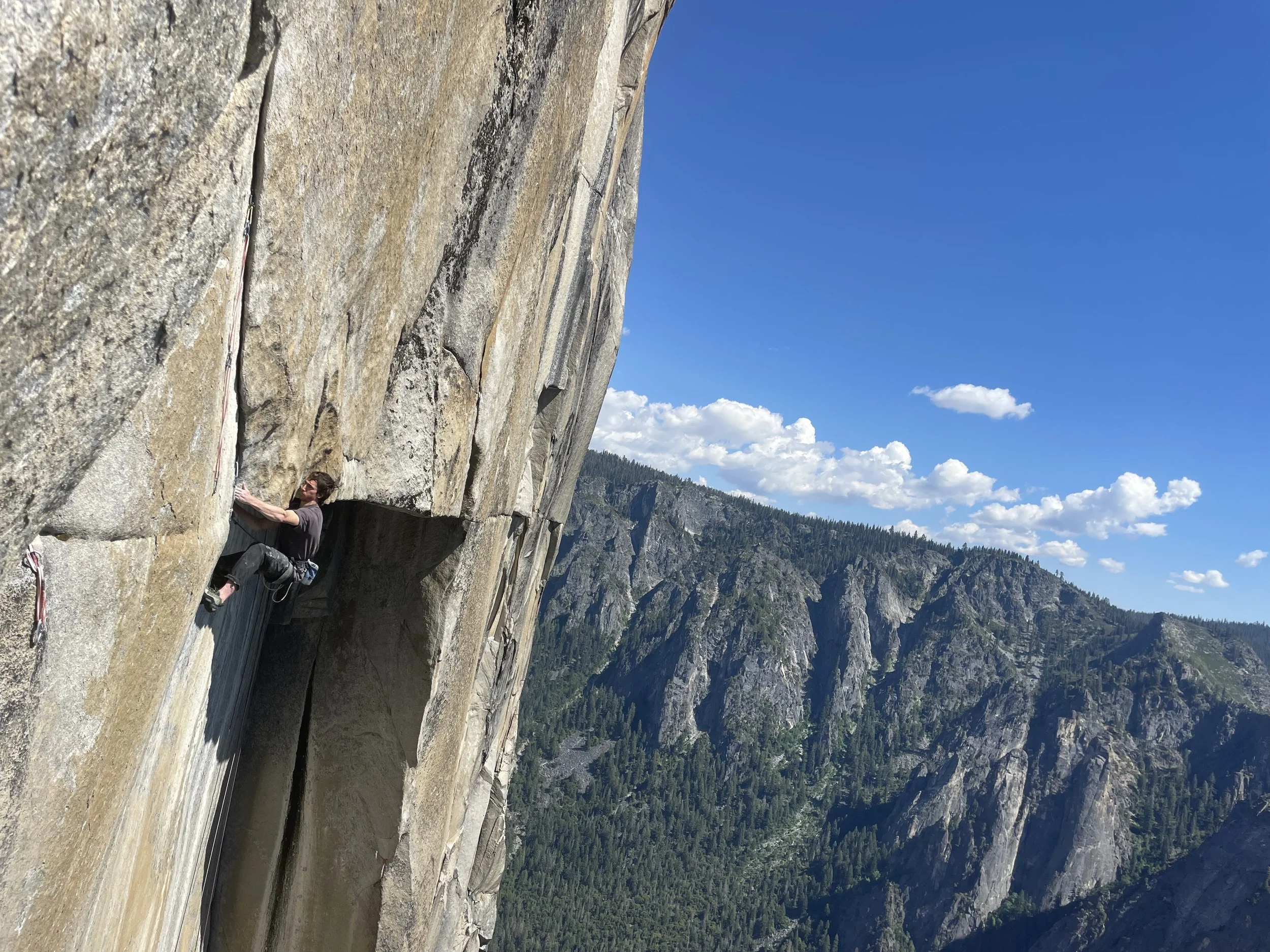
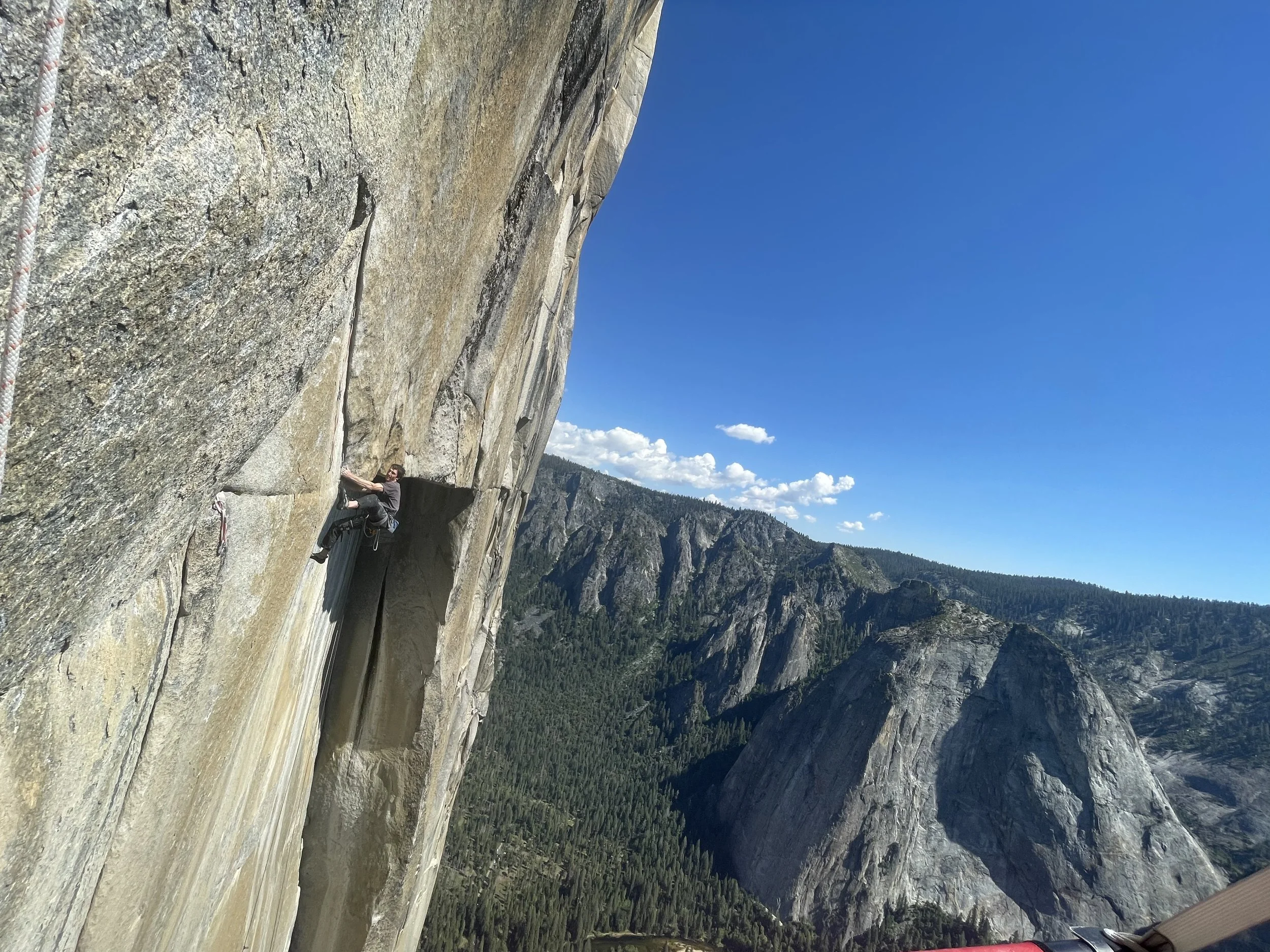
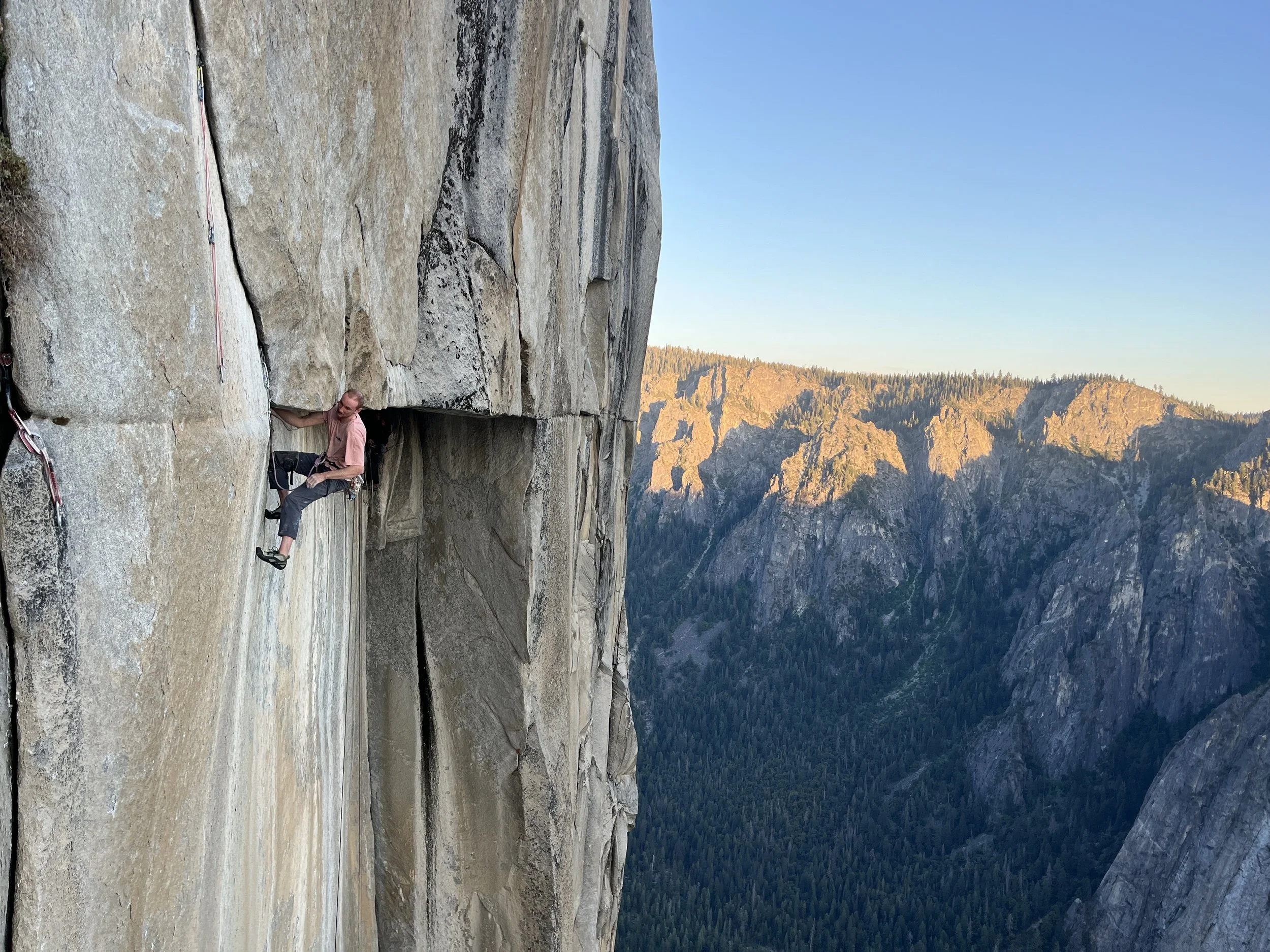
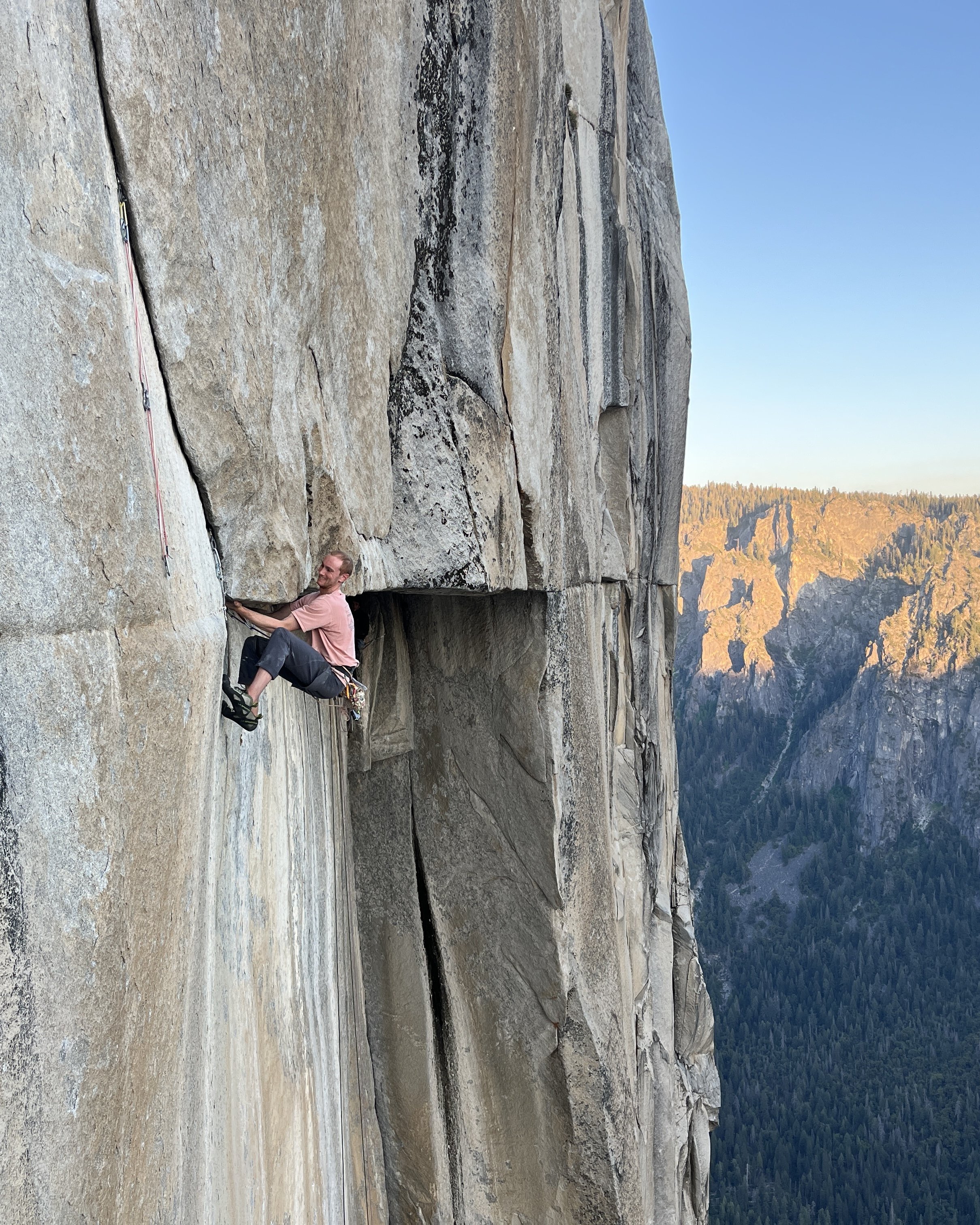
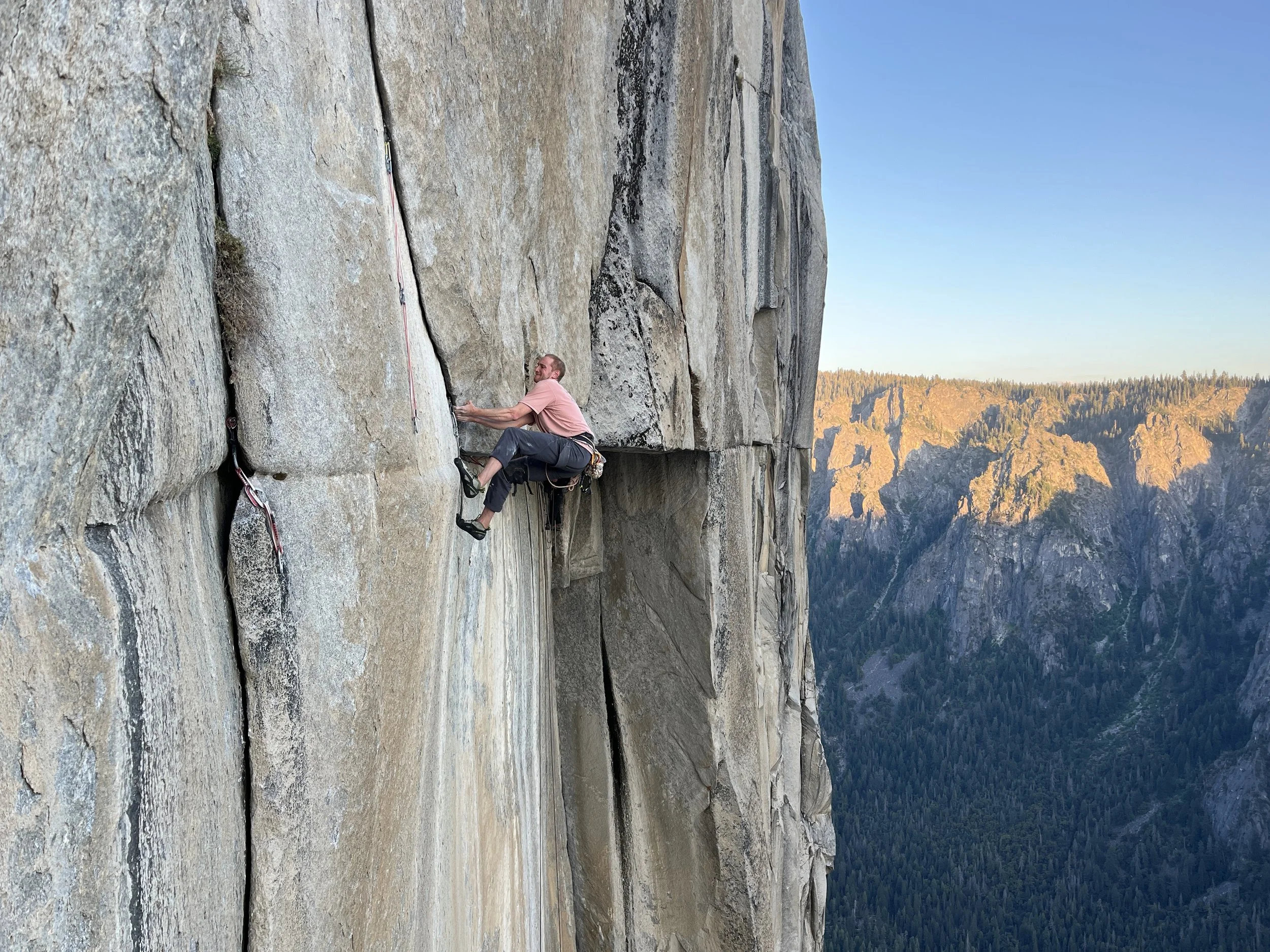
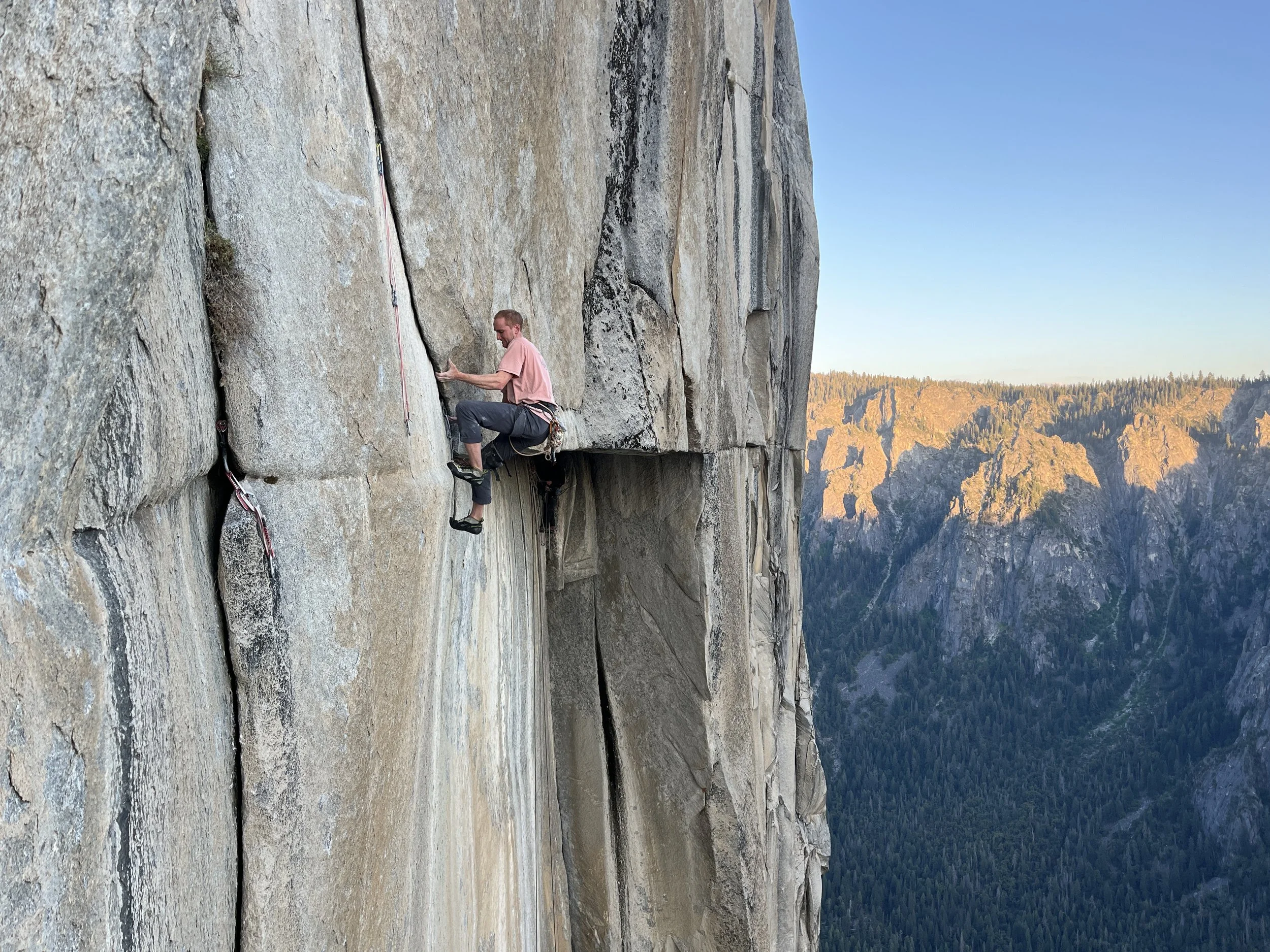
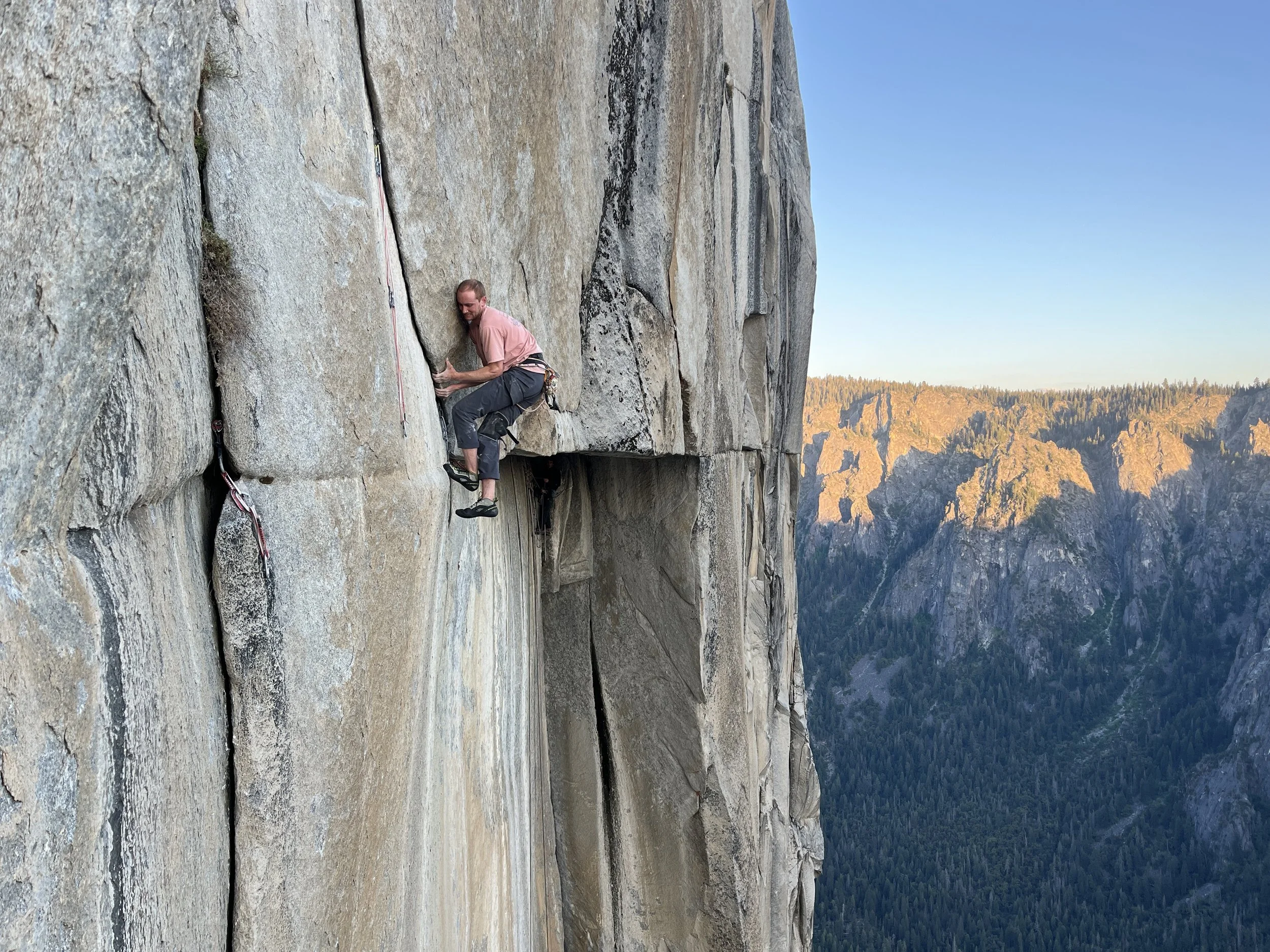
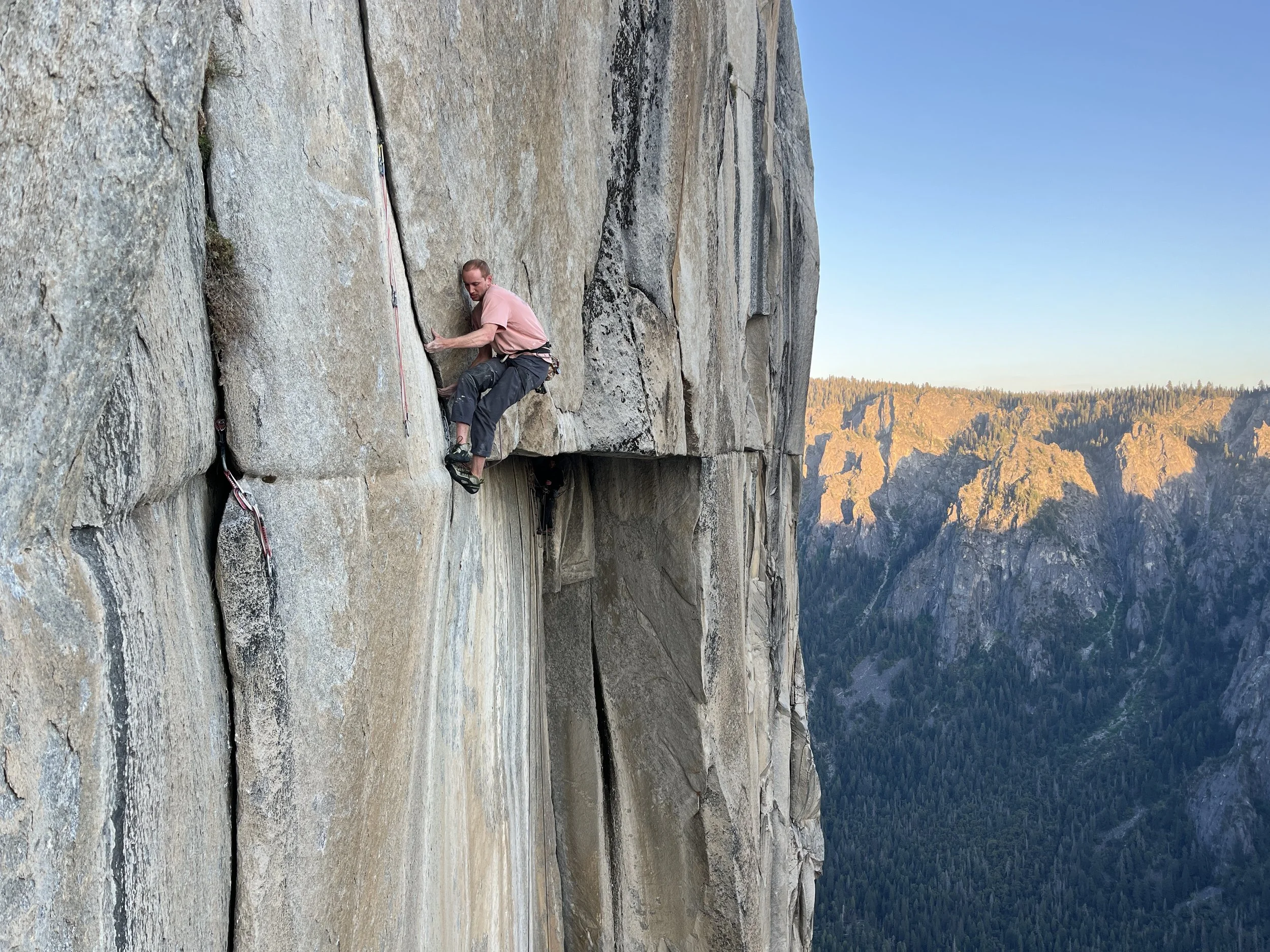
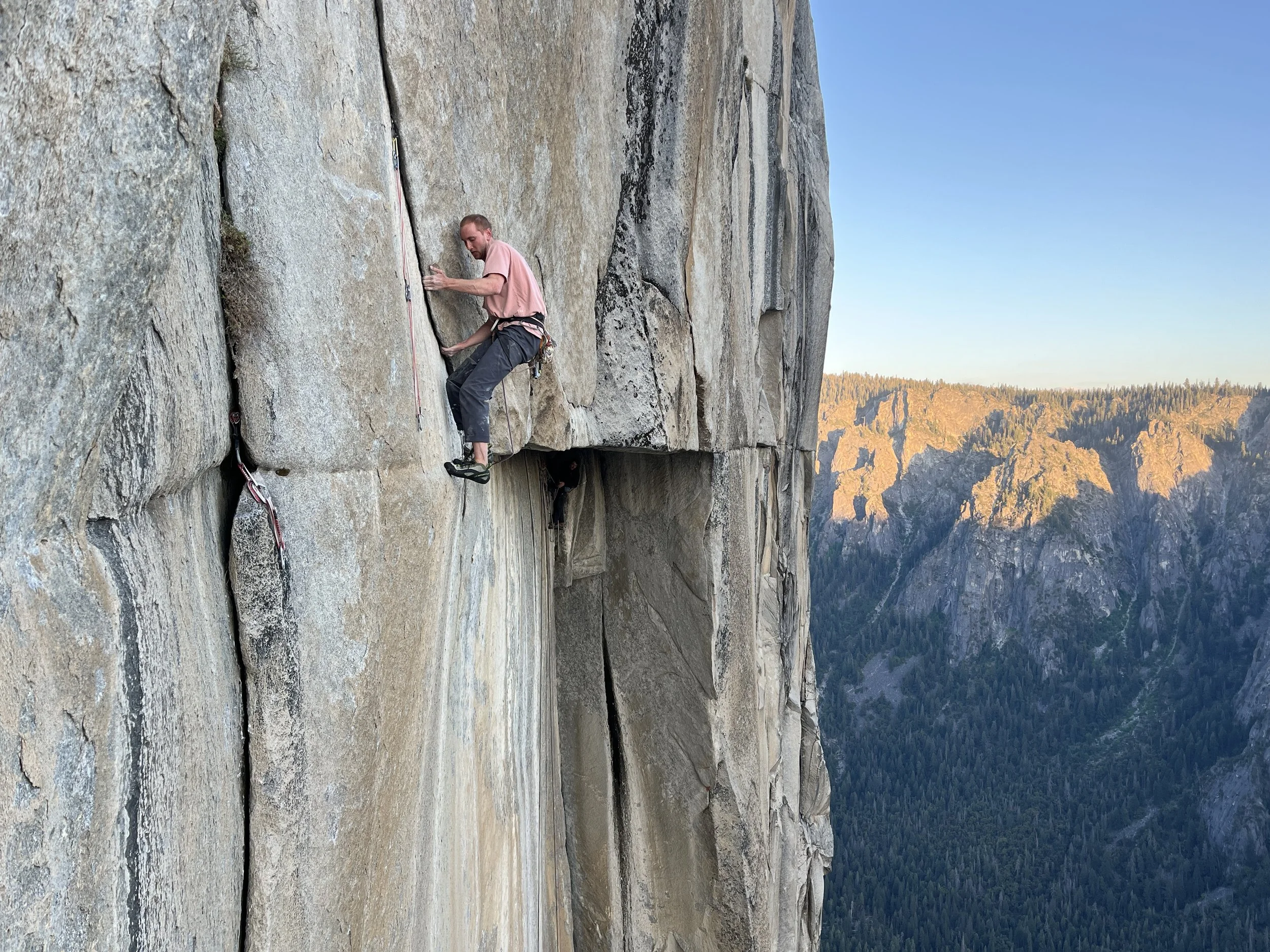
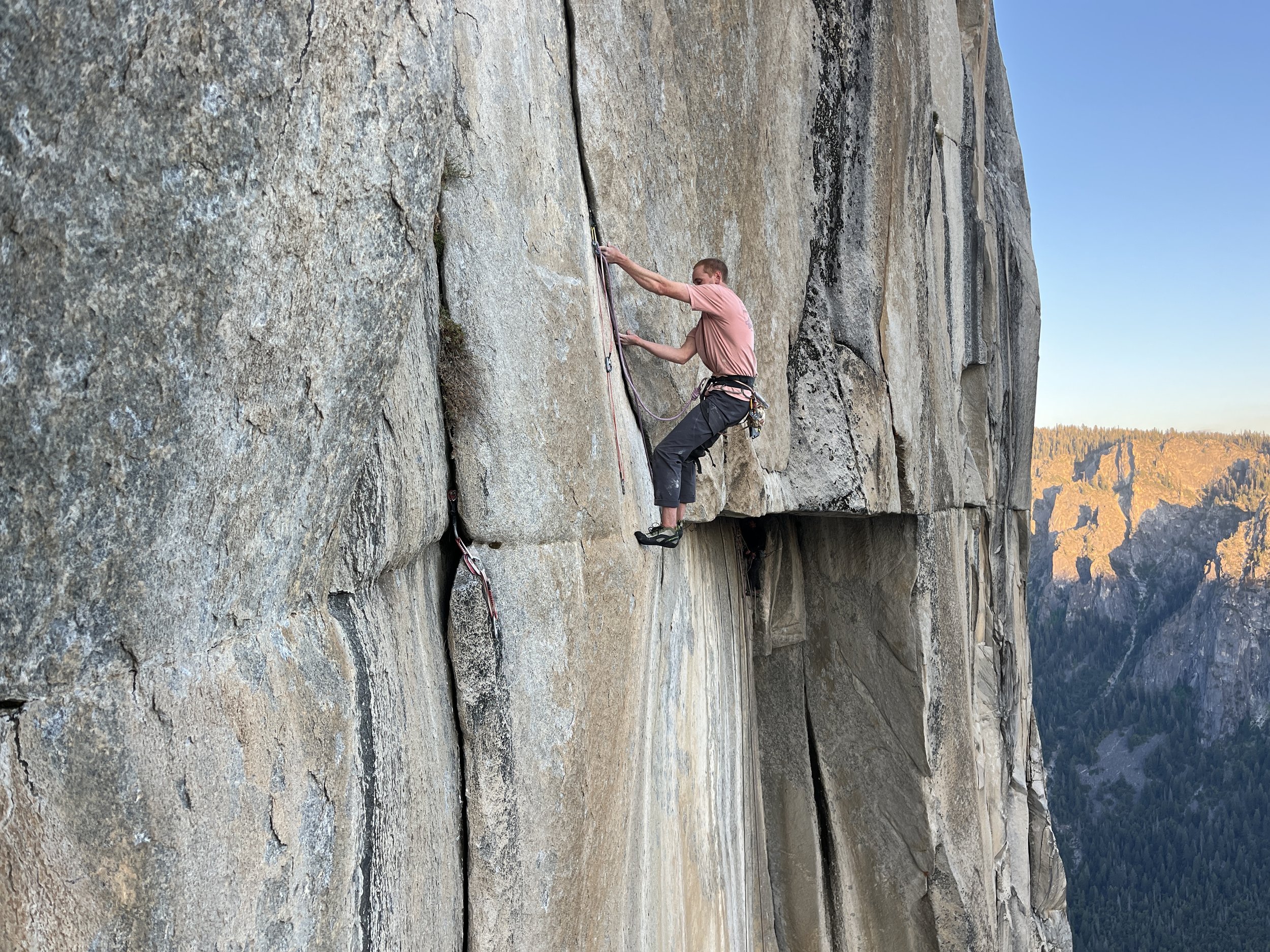
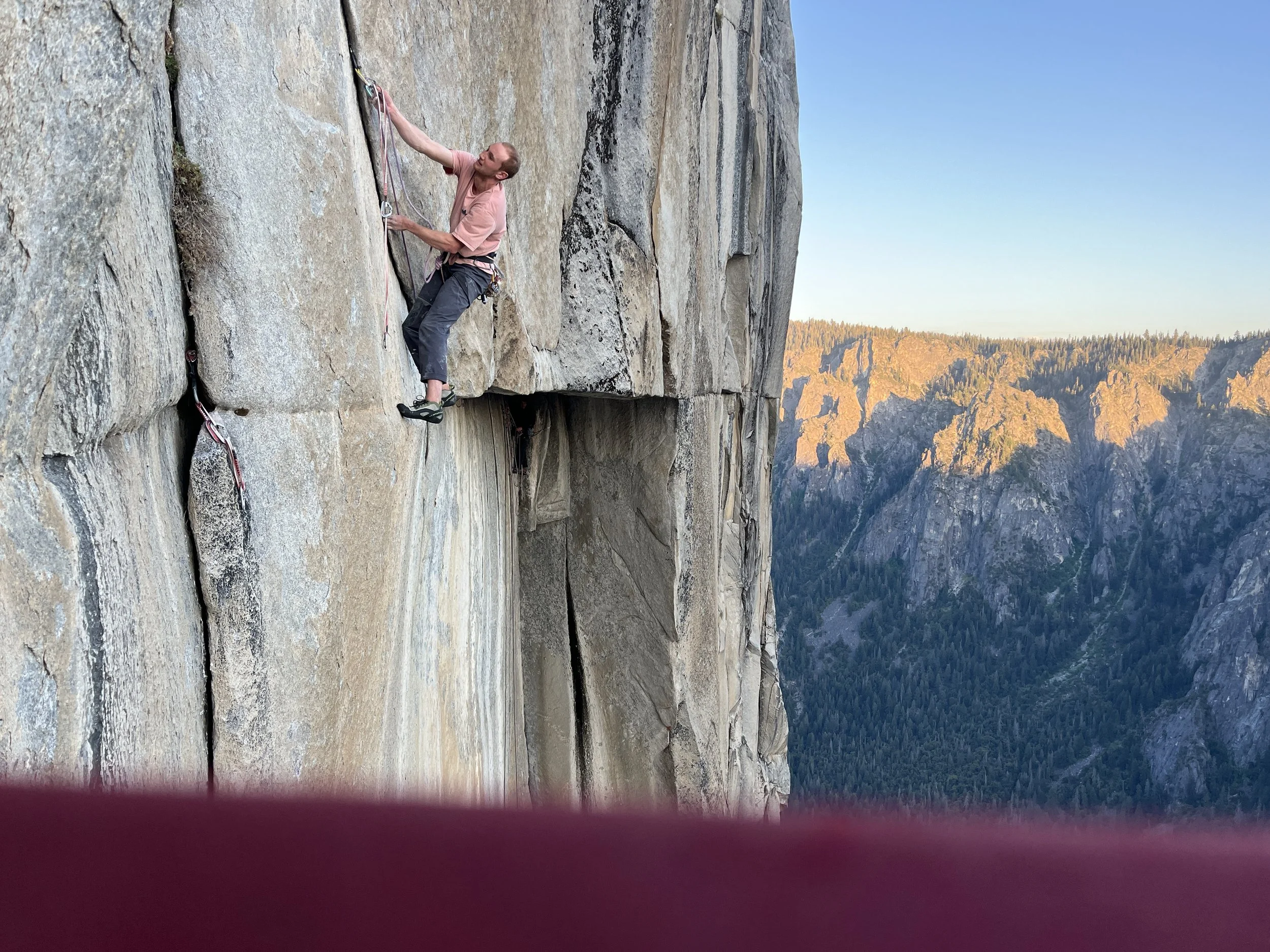
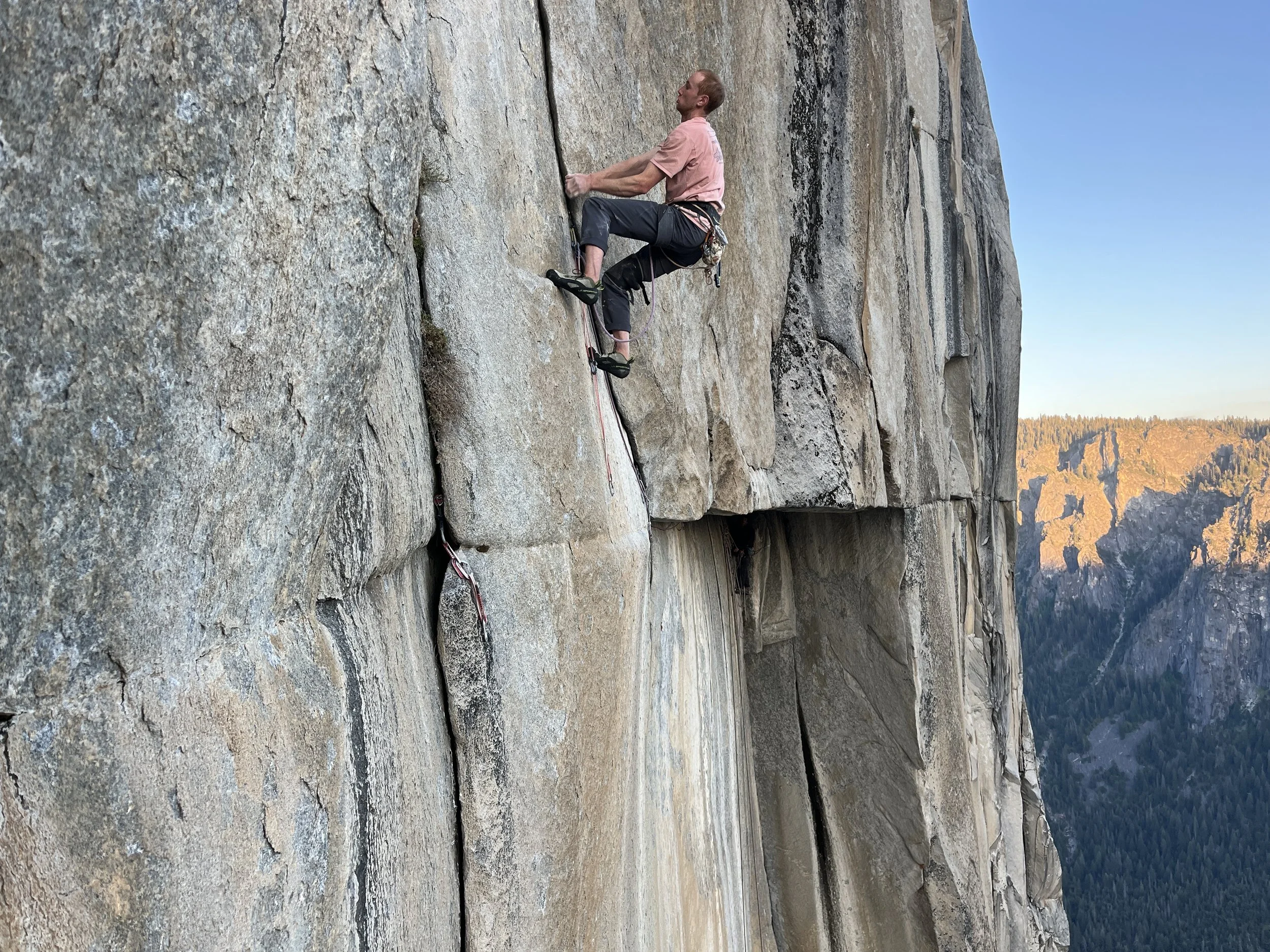
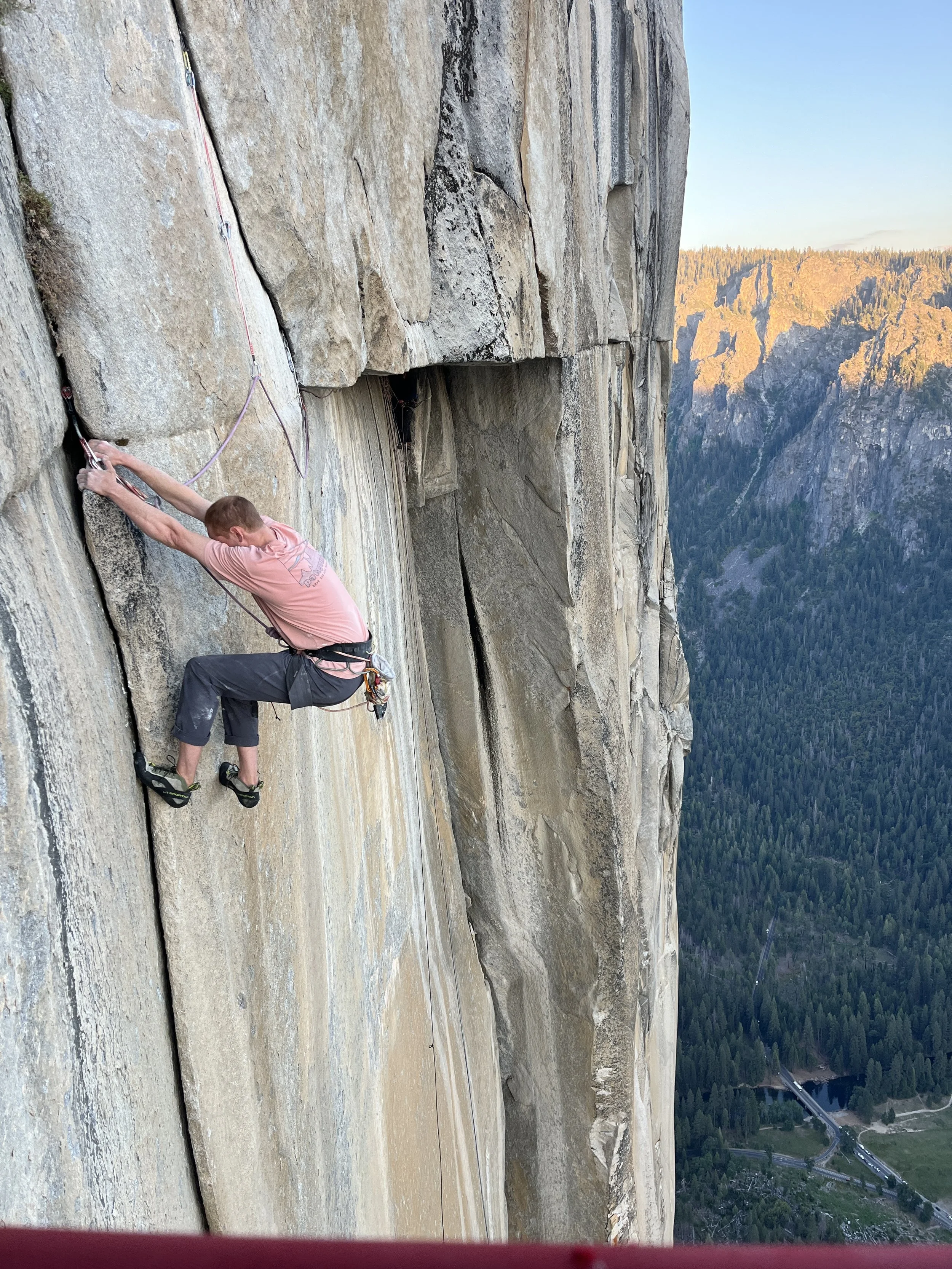
After sending the roof, anxiety crept in. I attempted to take a note from Kierkegaard to delay the onset of the dizziness that hampers freedom but something about sending the roof brought a significant amount of stress. Presumably this is because this was the first time I knew I could actually send the route and my ego was now in fear of failure. The two remaining 5.13 pitches, the Golden Desert and A5 Traverse, I had climbed years earlier on Golden Gate, but the pressure to do them again felt very real. Anxiety is an emotion I truly dread, but the only way to get out of it was to succeed or fail.
The next morning I took a whip on the Golden Desert and opted to call it good after a clean TR lap, sacrificing some style points to protect my skin and give myself the best chance at the send. After a few more attempts on the roof that morning, Julian seemed close to calling it quits, but I was certain he had it. With a little encouragement and a lot of tape, he adjusted his beta, removed a cam blocking a key heel-toe cam position, and sent midday.
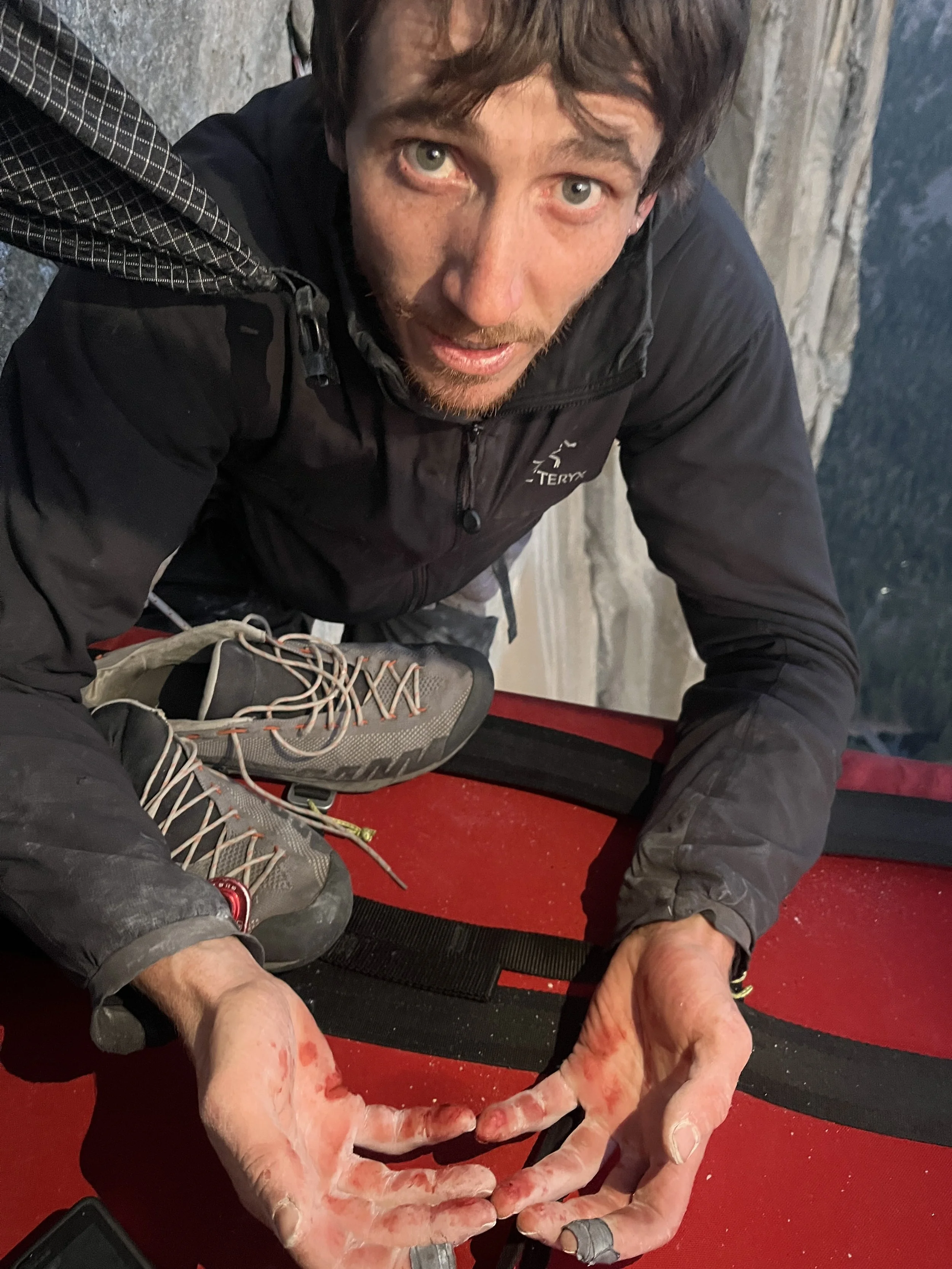
By this point Julian's skin had deteriorated to where he was bleeding through 8 of 10 fingertips. Mine was not much better. It became a daily ritual to spend hours taping and super-gluing our fingers before redpoint attempts, equal parts comedy and suffering (but perhaps more the latter for Julian).
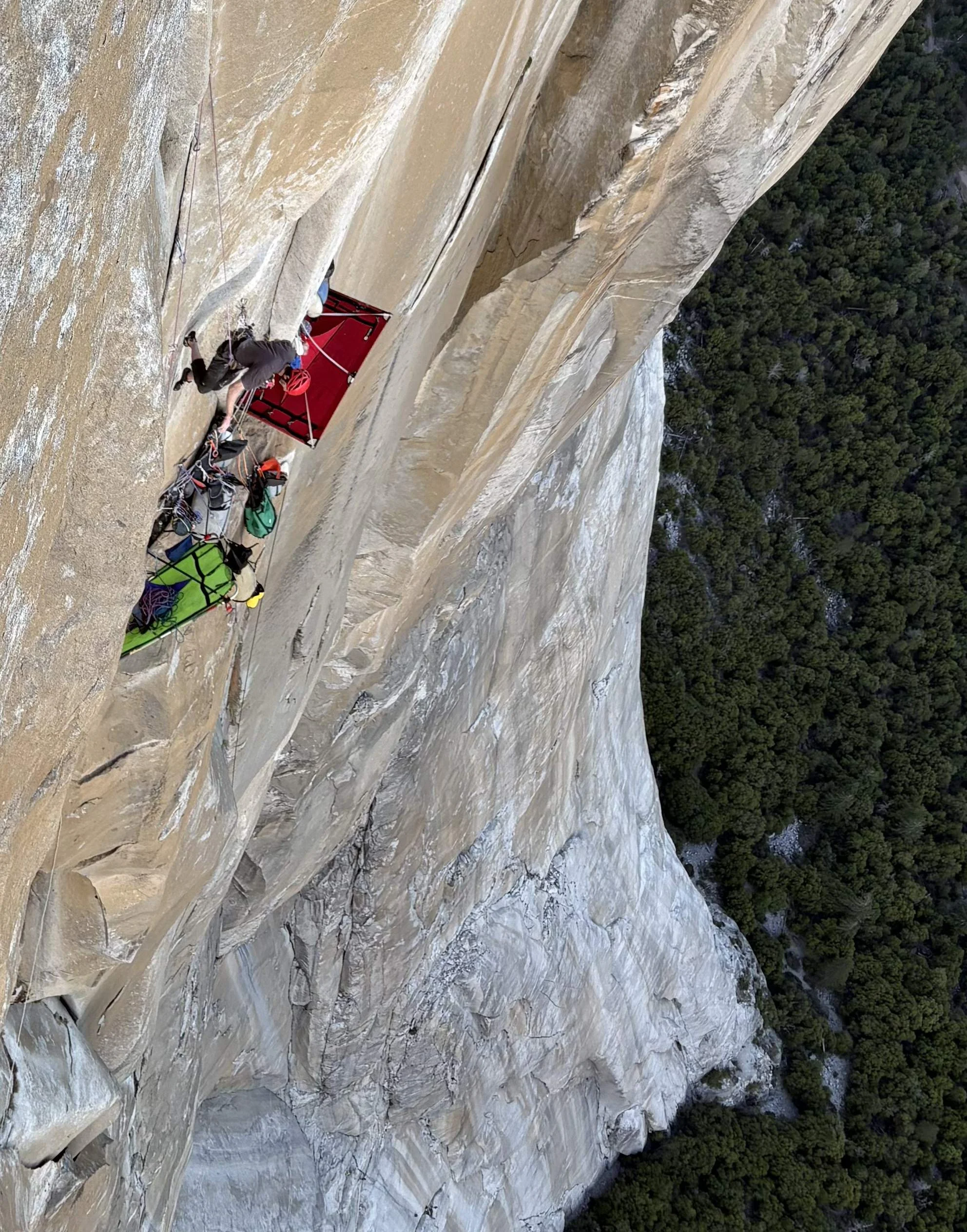
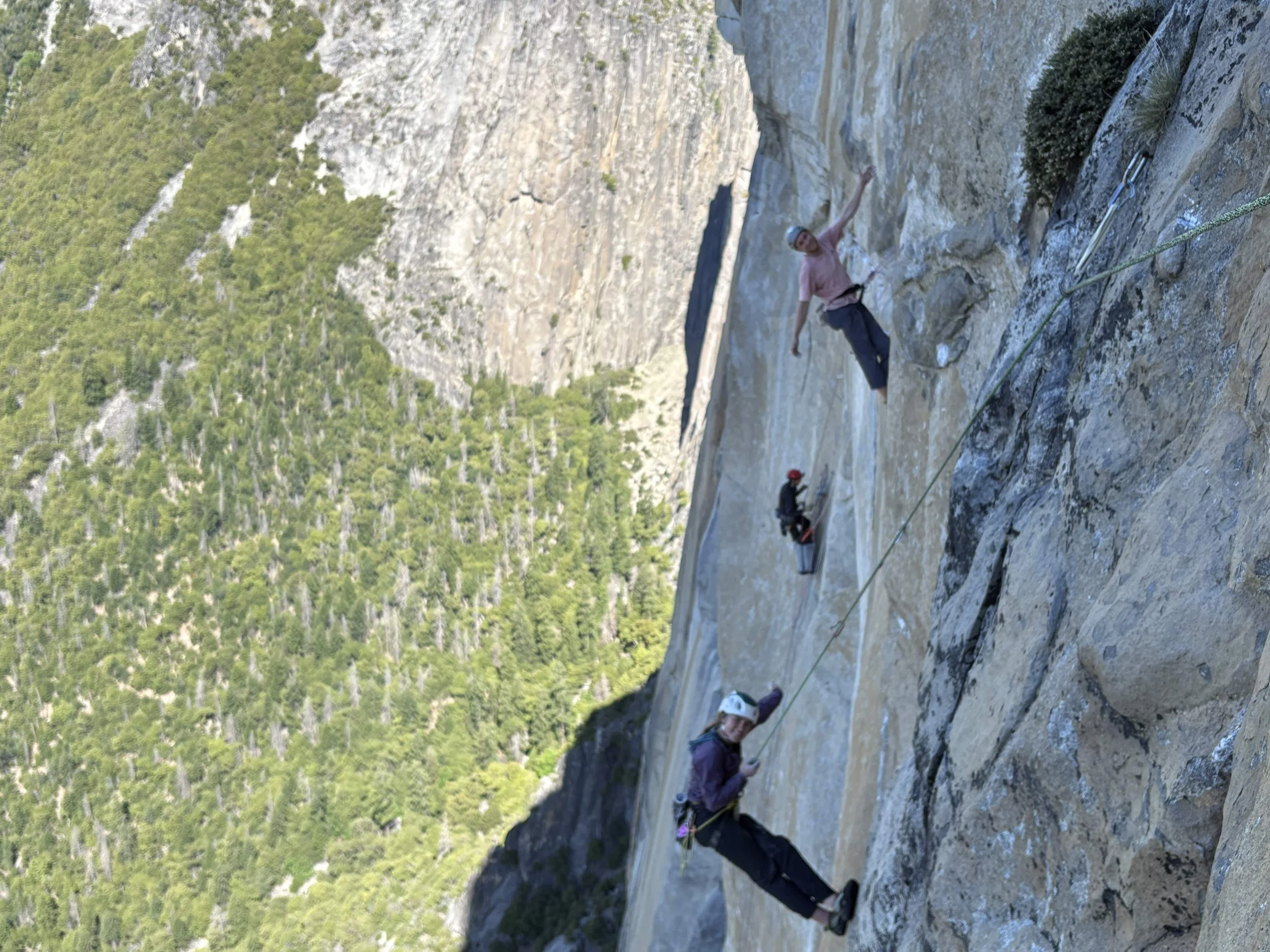
That evening we sorted out the A5 Traverse beta and went to bed hoping to send it the next morning and top out the same day. We woke up, blasted Bad Bunny to get psyched, and jugged to the hanging belay. I went first, intending just to warm up by hanging at each bolt, but instead climbed 39 of the 40 feet clean before falling on the final move. Julian sent it first go. I did it next go, and just like that, the send was locked in.
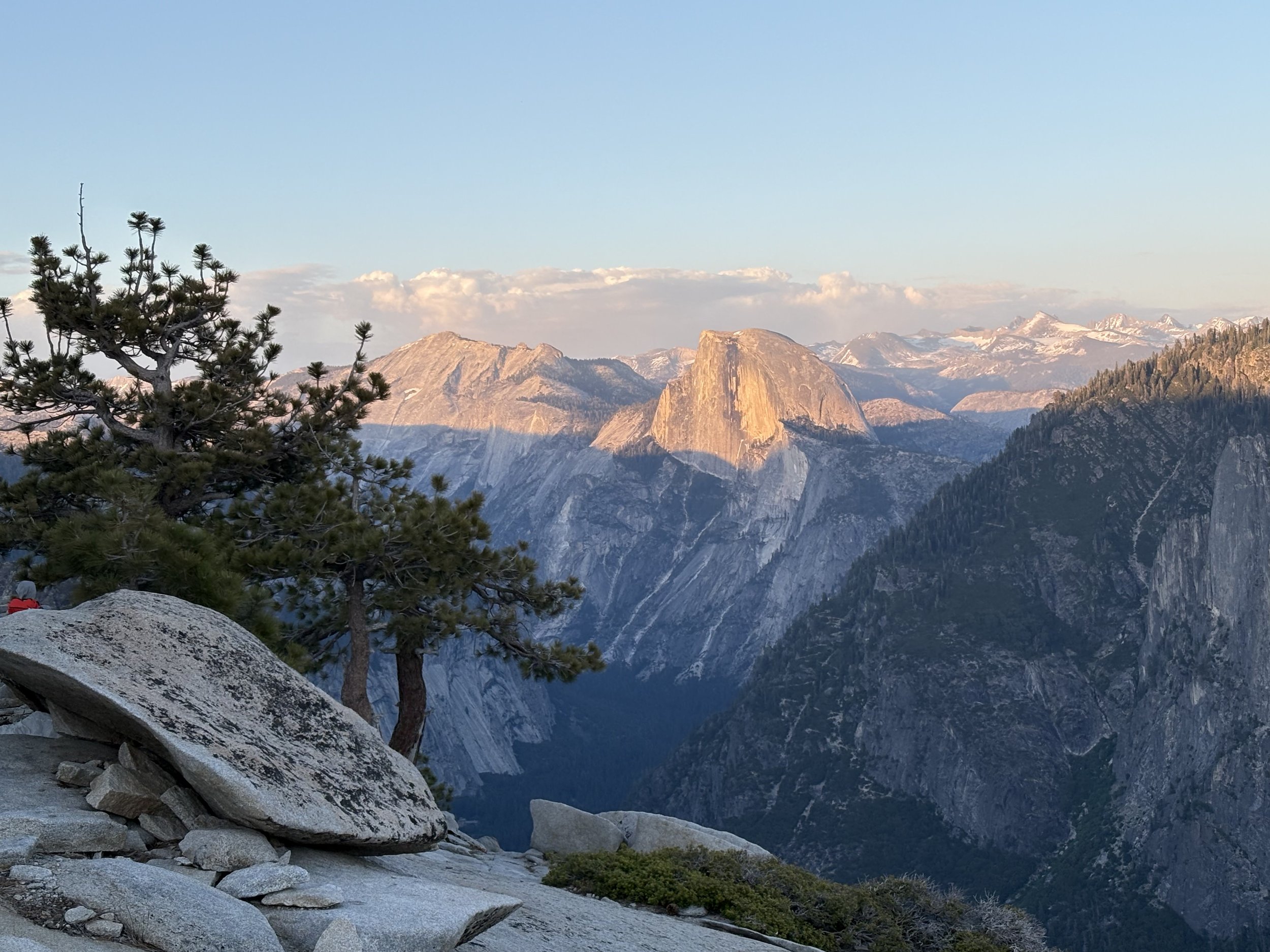
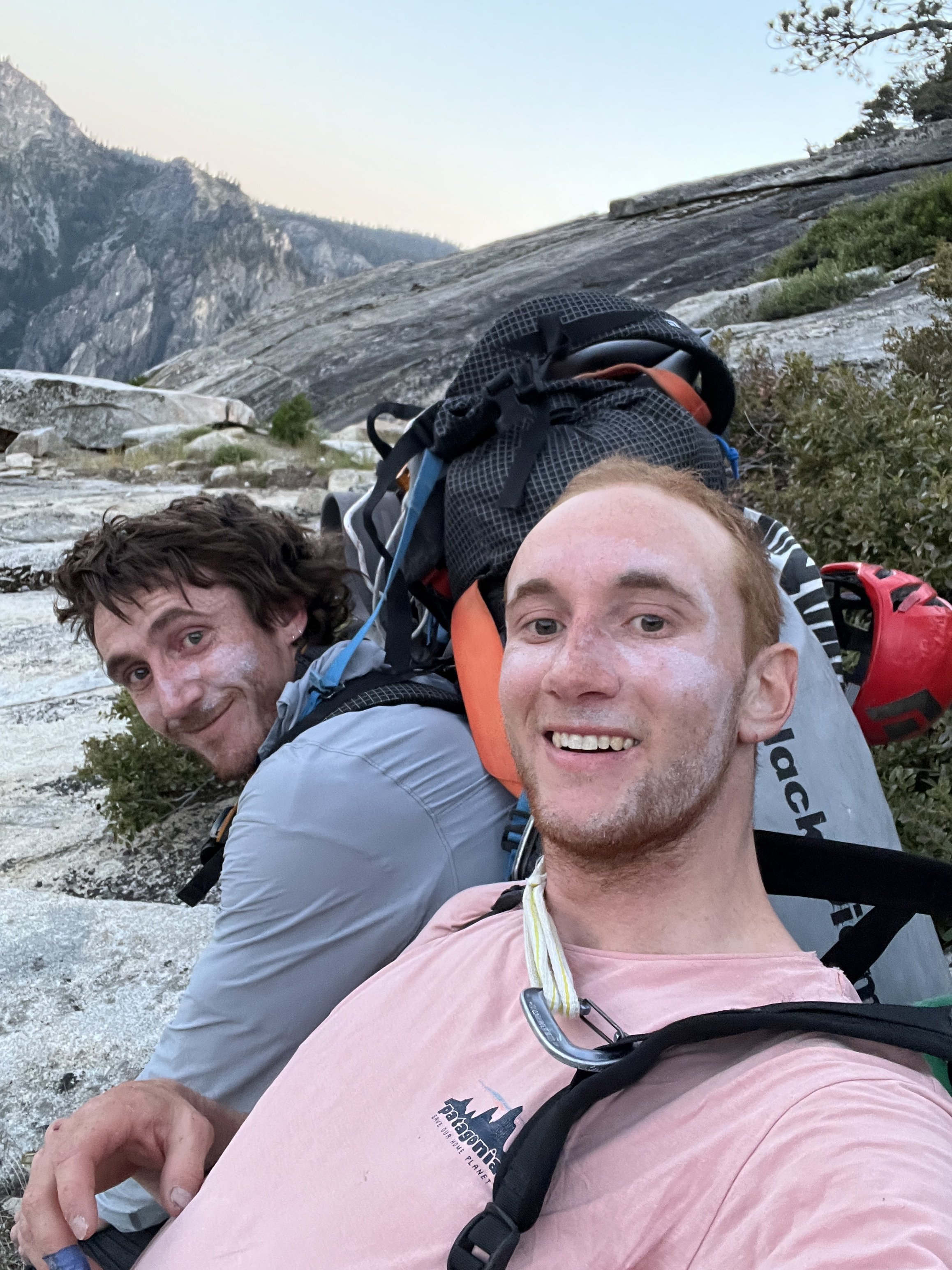
We climbed the next sandbagged 5.12a pitch, rapped back to pack up camp, and followed Fiona and Ari to the top. On the final pitch we were met by Ari’s friend Wiley, a true summit angel who had brought up snacks, hauling help, and quality energy. We celebrated with two beers Julian had stashed on top, then began the long hike down with haul bags, bruised, bloody, and exhausted.
Huge shout out to Julian for being such an incredible climbing partner. Free climbing a route like this demands so much from both people on the rope, and I feel lucky to have had him there.